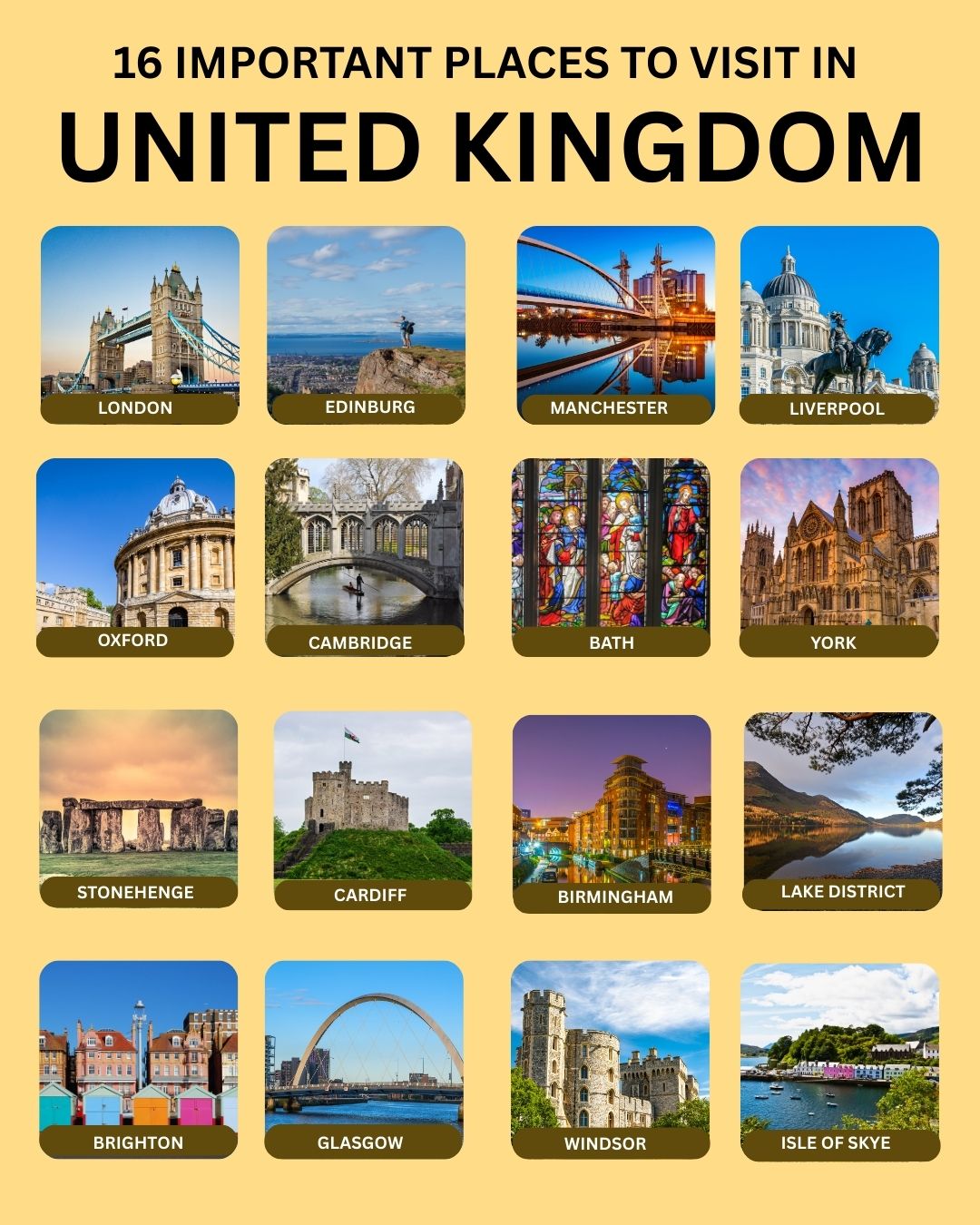
The United Kingdom packs royal history, dramatic coastlines, and centuries-old universities into a country you can cross by train in a day. Few places offer this much variety in such a compact space.
Travelers can wander a medieval cathedral in the morning and stand before ancient stone circles by afternoon. These sixteen destinations capture the UK at its most memorable, spanning England, Scotland, and Wales. Each one brings its own layer of history, landscape, or culture worth experiencing firsthand.
The UK at a Glance
| Destination | Region | Best Known For | Best Time to Visit |
|---|---|---|---|
| London | England | Royal landmarks, museums, theatre | May to September |
| Edinburgh | Scotland | Historic Old Town, castle, festivals | May to September |
| Manchester | England | Football history, nightlife | May to September |
| Liverpool | England | Beatles history, maritime heritage | May to September |
| Oxford | England | University architecture, history | April to September |
| Cambridge | England | University colleges, river punting | April to September |
| Bath | England | Roman Baths, Georgian architecture | April to September |
| York | England | Medieval streets, cathedral | April to October |
| Stonehenge | England | Prehistoric stone circle | April to September |
| Cardiff | Wales | Castle, capital city culture | May to September |
| Birmingham | England | Canals, industrial heritage | May to September |
| Lake District | England | Mountain scenery, hiking | May to September |
| Brighton | England | Seaside charm, pier | May to September |
| Glasgow | Scotland | Victorian architecture, music scene | May to September |
| Windsor | England | Royal castle | April to September |
| Isle of Skye | Scotland | Dramatic Highland landscapes | May to September |
London
London anchors the United Kingdom as its capital and cultural center. Layers of history stretch from Roman foundations to modern skyscrapers along the Thames. The city blends royal tradition with world-class museums, theatre, and a genuinely global food scene.
What to See in London
- Tower Bridge. This Victorian landmark offers a glass floor walkway with sweeping views over the Thames.
- Buckingham Palace. The monarch’s official residence has anchored royal life in the city since 1837.
- The British Museum. Free entry and millions of artifacts make this one of the world’s great museums.
- Westminster Abbey. Nearly every English monarch since 1066 has been crowned inside this Gothic church.
- The West End. London’s theatre district rivals Broadway for the range and quality of its productions.
Edinburgh
Scotland’s capital blends medieval architecture with a lively modern culture. Its Old Town, a UNESCO World Heritage Site, has stood largely unchanged for centuries. Edinburgh hosts the world’s largest arts festival every August, drawing performers from across the globe.
What to See in Edinburgh
- Edinburgh Castle. Perched on an extinct volcano, this fortress holds the Scottish Crown Jewels and centuries of history.
- The Royal Mile. This cobblestone street connects the castle to the Palace of Holyroodhouse.
- Arthur’s Seat. This extinct volcano rewards hikers with sweeping views after a moderate climb.
- The National Museum of Scotland. Free entry and wide-ranging exhibits make this a rewarding stop.
- Victoria Street. This curved, colorful street is one of the most photographed corners of the Old Town.
Manchester
Manchester built its identity on industry, music, and football. Once a center of textile manufacturing, it transformed into a hub for creative culture and sport. Gothic architecture sits alongside converted warehouses now filled with bars and independent shops.
What to See in Manchester
- Old Trafford. Home to Manchester United since 1910, this stadium offers tours through its trophy-filled museum.
- Manchester Cathedral. This medieval church dates back to the 1400s and anchors the city’s historic core.
- The Northern Quarter. This creative district is packed with independent bars, live music, and street art.
- The Science and Industry Museum. This free museum traces Manchester’s role in the industrial revolution.
- Castlefield. This restored waterway district features Roman ruins alongside Victorian era canals.
Liverpool
Liverpool’s identity is inseparable from the Beatles and its deep maritime history. The city’s waterfront once handled massive transatlantic trade, and its docks remain a defining feature. Music history runs just as deep, from the Cavern Club to a citywide passion for football.
What to See in Liverpool
- The Beatles Story. This museum traces the band’s rise from a small Liverpool club to global fame.
- Albert Dock. This restored 19th century dock now holds museums, restaurants, and waterfront views.
- Anfield Stadium. Liverpool FC’s historic home offers tours through its dressing rooms and museum.
- The Merseyside Maritime Museum. This museum explores the city’s role in shipbuilding and emigration.
- The Cavern Club. This legendary venue hosted the Beatles nearly 300 times in the early 1960s.
Oxford
Oxford holds one of the world’s oldest universities, with teaching dating back to at least 1096. Its skyline of spires and quads has earned the nickname the city of dreaming spires. Academic tradition shapes nearly every corner of the compact city center.
What to See in Oxford
- The Bodleian Library. This historic library holds an extraordinary collection of rare books and manuscripts.
- Christ Church College. This grand college features a striking dining hall and cathedral within its grounds.
- The Covered Market. This historic market offers a mix of local shops and casual food stalls.
- River punting. Gliding along the Cherwell offers a relaxed, classic Oxford experience.
- The Ashmolean Museum. Britain’s oldest public museum houses art and archaeology spanning world history.
Cambridge
Cambridge shares Oxford’s academic prestige but carries its own distinct character. Its colleges line the River Cam, connected by footpaths and centuries-old bridges. The city’s flat terrain and compact center make it especially pleasant to explore by bike.
What to See in Cambridge
- King’s College Chapel. This soaring Gothic chapel is one of the finest examples of English architecture.
- The Bridge of Sighs. This covered bridge at St John’s College is a favorite photo spot.
- River punting. Cambridge’s version of this classic activity offers views of college backs along the Cam.
- The Fitzwilliam Museum. This free museum houses an impressive collection of art and antiquities.
- Market Square. This central market offers fresh produce, crafts, and a lively local atmosphere.
Bath
Bath owes its name and fame to the Romans, who built elaborate baths around its natural hot springs nearly 2,000 years ago. The city later flourished as a fashionable Georgian spa town. Its honey-colored architecture remains remarkably well preserved today.
What to See in Bath
- The Roman Baths. These ancient baths remain remarkably intact, with interactive displays explaining their history.
- The Royal Crescent. This sweeping row of Georgian townhouses represents 18th century architecture at its finest.
- Bath Abbey. This Gothic church features a striking fan vaulted ceiling.
- Pulteney Bridge. This 18th century bridge is lined with shops on both sides, a rare architectural feature.
- Prior Park Landscape Garden. This garden offers sweeping views over the city from its Palladian bridge.
York
York’s history stretches from Roman occupation through Viking rule to medieval prosperity. Its city walls remain among the best preserved in England. Narrow medieval streets and a soaring Gothic cathedral define the compact, walkable city center.
What to See in York
- York Minster. This Gothic cathedral ranks among the largest of its kind in northern Europe.
- The Shambles. This narrow, timber-framed street has stood since medieval times.
- The city walls. These medieval walls offer a walkable loop with sweeping views over the city.
- Clifford’s Tower. This 13th century tower offers panoramic views from its rooftop platform.
- The National Railway Museum. This free museum holds an impressive collection of historic locomotives.
Stonehenge
Stonehenge remains one of the world’s most recognizable prehistoric monuments. Built in stages starting around 3000 BC, its exact purpose still puzzles historians and archaeologists. The massive stones, some transported from over 150 miles away, continue to draw visitors seeking a connection to ancient Britain.
What to See at Stonehenge
- The stone circle. This iconic monument remains the site’s central draw, best viewed at sunrise or sunset.
- The visitor center. This center provides context on the monument’s construction and purpose.
- Solstice events. Special access is granted during the summer and winter solstice for those wanting a closer experience.
- The surrounding landscape. Burial mounds and ancient pathways surround the main site, adding historical depth.
- Nearby Salisbury. This cathedral city makes a natural pairing with a Stonehenge visit.
Cardiff
Cardiff serves as the capital of Wales, blending a layered history with a growing modern skyline. Roman foundations sit beneath a Victorian Gothic castle at the city’s center. Cardiff Bay’s transformation from working docks to a lively waterfront reflects the city’s broader modern growth.
What to See in Cardiff
- Cardiff Castle. This layered site blends Roman ruins with a Victorian Gothic mansion.
- Cardiff Bay. This waterfront district offers walking paths and views of the Welsh Parliament building.
- The Wales Millennium Centre. This striking performance venue anchors the city’s arts scene.
- St Fagans. This open air museum near Cardiff showcases centuries of Welsh life through relocated historic buildings.
- Cardiff Market. This Victorian market hall offers local food and a genuine taste of the city.
Birmingham
Birmingham built its reputation as the workshop of the world during the industrial revolution. Its extensive canal network, once used to move goods, now anchors a revitalized waterfront district. The city has become one of the UK’s most diverse, reflected in its food and cultural scene.
What to See in Birmingham
- The canal network. Birmingham has more miles of canal than Venice, now lined with bars and restaurants.
- The Birmingham Museum and Art Gallery. This museum holds a significant Pre-Raphaelite art collection.
- The Bullring. This major shopping center anchors the city’s retail and dining scene.
- Cadbury World. This attraction traces the history of the city’s famous chocolate maker.
- The Jewellery Quarter. This historic district remains a center for jewelry making and design.
Lake District
The Lake District combines England’s most dramatic mountain scenery with glacial lakes and literary history. Poet William Wordsworth drew inspiration from its landscapes, and his legacy still shapes the region’s identity. Outdoor lovers come for hiking, while others simply enjoy the scenic drives and villages.
What to See in the Lake District
- Windermere. England’s largest natural lake offers boat cruises and lakeside walking paths.
- Grasmere. This small village was once home to Wordsworth and remains known for traditional gingerbread.
- Scafell Pike. England’s highest peak challenges hikers with sweeping summit views.
- Derwentwater. This quieter lake near Keswick offers peaceful walking and boat trips.
- Aira Force Waterfall. This dramatic waterfall cascades through a wooded gorge near Ullswater.
Brighton
Brighton has drawn visitors to England’s south coast since the 18th century, when it became a fashionable seaside resort. Its pier, beach huts, and eclectic Lanes district give it a distinct, playful character. The city blends traditional seaside charm with a famously creative, alternative culture.
What to See in Brighton
- Brighton Palace Pier. This classic Victorian pier features arcade games and traditional seaside food.
- The Royal Pavilion. This exotic palace was built as a seaside retreat for King George IV.
- The Lanes. This maze of narrow streets holds independent shops, cafes, and antique dealers.
- Brighton Beach. This pebble beach and its colorful huts define the city’s classic seaside look.
- The North Laine. This bohemian neighborhood offers vintage shops and a lively local atmosphere.
Glasgow
Glasgow carries a different energy than Edinburgh, shaped by its industrial past and thriving arts scene. Victorian architecture lines many of its streets, a legacy of the city’s shipbuilding wealth. Today it stands as Scotland’s cultural and musical capital.
What to See in Glasgow
- Kelvingrove Art Gallery and Museum. This grand building houses an extensive collection with free entry.
- The Riverside Museum. This striking building traces Glasgow’s transport and industrial heritage.
- The West End. This neighborhood offers independent shops, cafes, and a lively university atmosphere.
- Live music venues. Glasgow’s music scene has produced major acts, and small venues still host regular shows.
- The Clyde Arc. This distinctive modern bridge reflects the city’s ongoing waterfront redevelopment.
Windsor
Windsor is home to the oldest and largest occupied castle in the world, still used regularly by the royal family. The town’s history stretches back nearly a thousand years alongside the castle itself. Its riverside setting and royal connections make it a popular short trip from London.
What to See in Windsor
- Windsor Castle. This royal residence has been continuously occupied since the reign of William the Conqueror.
- St George’s Chapel. This chapel has hosted royal weddings and remains an active place of worship.
- The State Apartments. These lavish rooms showcase centuries of royal art and furnishings.
- Windsor Great Park. This vast park offers walking trails just beyond the castle walls.
- Eton College. This historic school sits just across the river, adding another layer of tradition.
Isle of Skye
Skye stands as one of Scotland’s most photographed regions, known for its dramatic cliffs and otherworldly rock formations. The island’s Highland scenery feels remote and largely untouched. Its landscapes have become iconic through both film and travel photography.
What to See on the Isle of Skye
- The Old Man of Storr. This rock pinnacle is one of the most recognizable formations in Scotland.
- The Quiraing. This dramatic landslip features jagged peaks and rolling green terrain.
- Portree. Skye’s main town features a colorful harbor and serves as a convenient base.
- The Fairy Pools. These clear blue pools sit at the base of the Black Cuillin mountains.
- Talisker Distillery. This coastal distillery produces one of Scotland’s most recognizable single malts.
Final Thoughts
These sixteen destinations capture the United Kingdom at its most varied, spanning royal history, dramatic coastlines, and centuries-old universities. Each stop offers its own layer of culture, architecture, or landscape worth experiencing firsthand. England, Scotland, and Wales each bring something distinct to the table.
Use this guide as a starting point for building your own UK itinerary. Mix cities with countryside, history with nightlife, and give yourself room to slow down along the way. The United Kingdom rewards travelers who take the time to explore beyond the obvious highlights.