
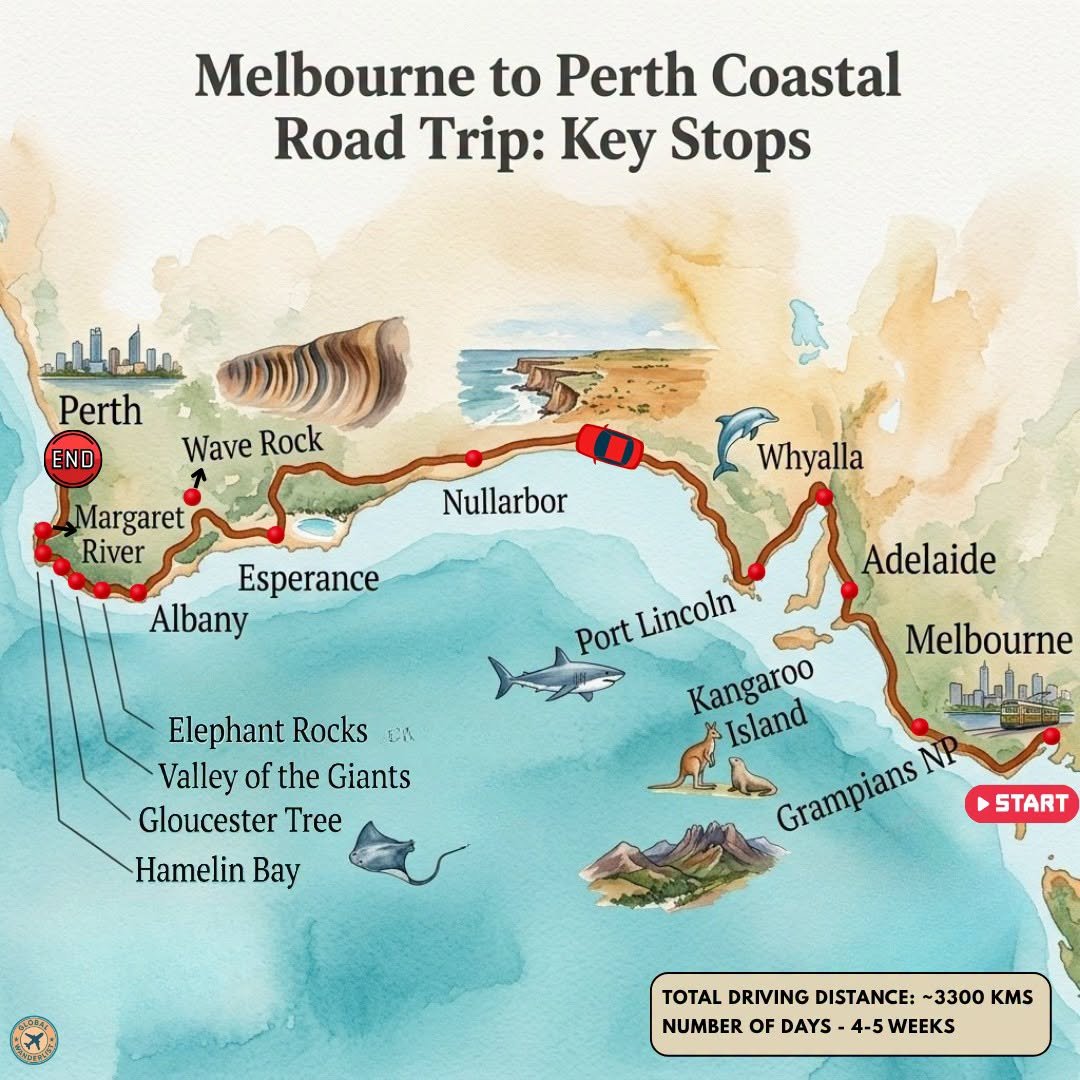
Driving from Melbourne to Perth is one of Australia’s great cross-country journeys. It links two coastlines through South Australia’s wine country, the vast Nullarbor Plain, and Western Australia’s southern forests. At roughly 3,300 kilometers, most travelers set aside four to five weeks to do it properly.
This route rewards patience. The Nullarbor stretch alone can feel endless, but it is bookended by dramatic coastal scenery on both sides. Below is a full breakdown of the drive, including where to eat and what to see at each major stop.
Route Overview
| Stop | Distance from Previous Stop | Best For |
| Melbourne (Start) | – | City sights, laneway culture |
| Grampians National Park | 260 km | Hiking, mountain views |
| Adelaide | 420 km | Wine regions, city dining |
| Eyre Peninsula (Whyalla & Port Lincoln) | 380 km | Seafood, marine wildlife |
| Nullarbor Plain | 750 km | Long-distance driving, cliffs |
| Esperance | 720 km | White-sand beaches |
| Albany & Denmark | 480 km | Southern Ocean views, forests |
| Margaret River | 360 km | Wine, surf beaches |
| Perth (End) | 280 km | Coastal city, Rottnest Island |
Total driving distance sits around 3,300 kilometers. Spreading this across four to five weeks allows time to properly explore each region rather than rushing through.
Melbourne
Melbourne kicks off this journey with laneway art, strong coffee, and an easy walkable center. Before departing, it is worth spending a day exploring the city properly, since the stretch toward the Grampians moves quickly into rural Victoria.
Planning Tips for Leaving Melbourne
- Leave the city via the Western Freeway to avoid the busiest CBD traffic. Early morning departures make the first few hours of driving far smoother.
- Stock up on supplies before leaving, since fuel and grocery options become sparser once you reach regional Victoria.
- Check your spare tire and fluids before departure. This trip covers long, remote stretches where breakdown assistance can take hours to arrive.
What to See Before You Go
- Walk through Hosier Lane to see Melbourne’s ever-changing street art scene. It is one of the most photographed laneways in Australia.
- Visit the Royal Botanic Gardens for a calm start to the trip. Its lake and lawns make a relaxing final stop before the open road.
- Explore Federation Square, the city’s cultural hub, for a quick dose of galleries and architecture before departure.
Also read: Melbourne to Sydney Road Trip Idea: Inland Heritage Route
Grampians National Park
The Grampians rise dramatically from the surrounding plains, offering sandstone peaks, waterfalls, and abundant wildlife. Halls Gap serves as the main base for exploring the park. Kangaroos often graze right through the town in the early morning and evening.
Where to Eat in Halls Gap
- Halls Gap Hotel’s bistro is a local institution, known for char-grilled steaks and pub classics served on a wraparound verandah. It suits families and groups after a day of hiking.
- Livefast Cafe offers a cozy countryside atmosphere with craft beers and seasonal breakfast dishes. It is a favorite for refueling before a morning hike.
What to See in the Grampians
- Hike to the Pinnacle for panoramic views over Halls Gap and the surrounding ranges. It is one of the park’s most rewarding short walks.
- Visit Brambuk the National Park and Cultural Centre to learn about the area’s Aboriginal history and significance. The center’s architecture also reflects local Indigenous design.
- Drive to Boroka Lookout for sweeping views over Lake Bellfield and the valley below. It is especially striking at sunrise.
Adelaide
Adelaide sits between the Adelaide Hills and the Gulf St Vincent, known for its wide streets and nearby wine regions. Barossa Valley and McLaren Vale both sit within easy day-trip distance. The city’s food scene has grown considerably in recent years, particularly around the Adelaide Central Market.
Where to Eat in Adelaide
- Kiin brings modern Asian cooking with a South Australian twist, including a red curry cheeseburger and Northern Thai-inspired mains. It has quickly become one of the city’s most talked-about restaurants.
- Adelaide Central Market offers an enormous range of fresh produce, seafood stalls, and quick eats. It is worth an hour of wandering even if you are not buying groceries.
What to See in Adelaide
- Walk through the Adelaide Central Market precinct for a sense of the city’s food culture. Stalls sell everything from South Australian cheeses to fresh Spencer Gulf seafood.
- Visit the Adelaide Botanic Garden, home to a striking glasshouse and expansive lawns. It sits within easy walking distance of the CBD.
- Take a short drive into the Adelaide Hills for wine tasting at Hahndorf. The historic German settlement adds a distinct character to the visit.
Also read: Adelaide to Darwin Road Trip Idea
Eyre Peninsula (Whyalla & Port Lincoln)
The Eyre Peninsula juts into the Southern Ocean, known for its seafood industry and marine wildlife encounters. Whyalla serves as a steel-town gateway, while Port Lincoln calls itself the seafood capital of Australia. Cage diving with great white sharks is one of the region’s signature experiences.
Where to Eat on the Eyre Peninsula
- The Rogue & Rascal in Port Lincoln is known for brunch platters, strong coffee, and a relaxed, cozy atmosphere. It has built a loyal following among locals and visitors alike.
- Del Giorno’s Cafe Restaurant offers fresh seafood dishes, including local Kinkawooka mussels. Its harborside setting adds to the appeal.
What to See on the Eyre Peninsula
- Visit Whyalla’s Maritime Museum, home to the HMAS Whyalla, a decommissioned naval corvette on permanent display. It is an unusual, worthwhile stop for history buffs.
- Take a boat tour from Port Lincoln to see Australian sea lions in their natural habitat. The Eyre Peninsula is one of the few places where you can swim alongside them.
- Sample local oysters straight from the water at Coffin Bay, a short drive from Port Lincoln. The bay is famous nationally for its oyster farms.
Nullarbor Plain
The Nullarbor stretches nearly 1,200 kilometers across the Australian Bight, one of the longest straight roads in the world. Treeless plains give way to dramatic cliffs plunging into the Southern Ocean. This is the most remote stretch of the entire route, so fuel planning is essential.
Planning Tips for the Nullarbor
- Fill your tank at every roadhouse, even if it feels early. Distances between fuel stops can exceed 200 kilometers in places.
- Carry extra water and snacks in case of vehicle trouble. Mobile coverage disappears for long stretches across the plain.
- Watch for southern right whales near the Head of Bight between June and October. Viewing platforms along the cliffs offer excellent vantage points.
What to See on the Nullarbor
- Stop at the Bunda Cliffs, where sheer limestone walls drop straight into the ocean. It is one of the most dramatic coastal views in Australia.
- Visit the Nullarbor Links, the world’s longest golf course, stretched across roadhouses along the highway. Even non-golfers find the concept amusing.
- Photograph the iconic “Nullarbor” road signs warning of camels, wombats, and kangaroos. They have become an unofficial symbol of the crossing.
Esperance
Esperance sits on Western Australia’s south coast, known for some of the whitest sand and clearest water in the country. Lucky Bay, within nearby Cape Le Grand National Park, regularly ranks among Australia’s best beaches. Kangaroos are known to lounge directly on the sand here.
Where to Eat in Esperance
- The Pier Hotel offers classic pub meals with harbor views, making it a reliable choice after a day at the beach. Its casual atmosphere suits families and groups.
- Loose Goose Bar & Restaurant serves a more contemporary menu, with a strong local following for its seafood dishes and relaxed bar setting.
What to See in Esperance
- Visit Lucky Bay to see kangaroos relaxing on the sand, often just meters from the water. It remains one of the most photographed beaches in the country.
- Drive the Great Ocean Drive loop, a scenic coastal route past pink lakes and windswept cliffs. It takes about an hour and covers the town’s best viewpoints.
- Explore Cape Le Grand National Park for hiking trails between granite peaks and secluded bays. Frenchman Peak offers the best panoramic views in the park.
Albany & Denmark
Albany sits on Western Australia’s rugged southern coast, known for its whale-watching history and dramatic granite formations. Denmark, a short drive further west, adds wineries and towering karri forests to the mix. Together, they mark the transition into the state’s famous southwest.
Where to Eat in Albany & Denmark
- Gourmandise & Co in Albany specializes in French-style baking, ideal for a coffee and croissant stop. Its warm, boulangerie-style atmosphere is a local favorite.
- Castelli Estate in Denmark pairs its own Chardonnay and Shiraz with a restaurant overlooking Wilson’s Inlet. It is one of the region’s most scenic wine-and-dine stops.
What to See in Albany & Denmark
- Walk across The Gap and Natural Bridge, dramatic granite formations along Albany’s coastline. A glass platform lets visitors look straight down into the crashing waves.
- Visit the Valley of the Giants Tree Top Walk near Denmark, a walkway suspended among towering tingle trees. It offers a rare canopy-level view of an old-growth forest.
- Climb the Gloucester Tree near Pemberton, one of the tallest fire lookout trees in the world. It is not for the faint of heart, given its exposed metal rungs.
Margaret River
Margaret River is Western Australia’s premier wine region, known equally for its vineyards and world-class surf breaks. Caves, forests, and beaches surround the town, making it one of the most naturally diverse stops on this route. Most visitors extend their stay here beyond a single night.
Where to Eat in Margaret River
- The Cape Lodge Restaurant offers a refined fine-dining experience set among vineyards. It suits travelers looking for a special-occasion meal.
- The River is a relaxed, locally loved spot known for consistently good food and value. It works well for a casual dinner after a day of wine tasting.
What to See in Margaret River
- Tour the region’s wineries, many offering cellar door tastings paired with lunch. Vasse Felix and Leeuwin Estate are among the most established names.
- Explore Jewel Cave or Mammoth Cave, both showcasing striking underground formations. Guided tours run throughout the day.
- Watch surfers tackle the waves at Margaret River Mouth. Even non-surfers enjoy the dramatic meeting point of river and ocean.
Perth
Perth closes out this coastal crossing with a relaxed, sunny city built along the Swan River. Fremantle, just south of the city center, adds a historic port-town character with its own strong dining scene. Rottnest Island sits a short ferry ride offshore, famous for its quokkas.
Planning Your Perth Arrival
- Time your arrival to avoid peak traffic on the Kwinana Freeway. Weekday afternoons between 3 and 6 p.m. tend to be the busiest.
- Book a Rottnest Island ferry in advance if you plan to visit, since sailings fill up quickly during school holidays.
- Return your hire car promptly if you rented one for the trip. Perth’s inner-city parking can be limited near the main dining strips.
What to See in Perth
- Take the ferry to Rottnest Island to see quokkas up close. The island’s beaches also rank among the best in Western Australia.
- Walk through Kings Park for sweeping views over the Swan River and city skyline. Its botanic gardens are among the largest inner-city parks in the world.
- Explore Fremantle’s historic port precinct, including its markets and converted warehouses. The area has become one of Perth’s most vibrant dining destinations.
Final Thoughts
The Melbourne to Perth coastal route covers an extraordinary range of landscapes, from mountain ranges to endless plains to towering forests. Every stop adds its own character, and the long stretches of driving make the arrival at each destination feel well earned. Give yourself the full four to five weeks if you can, and let the smaller detours shape the trip along the way.