
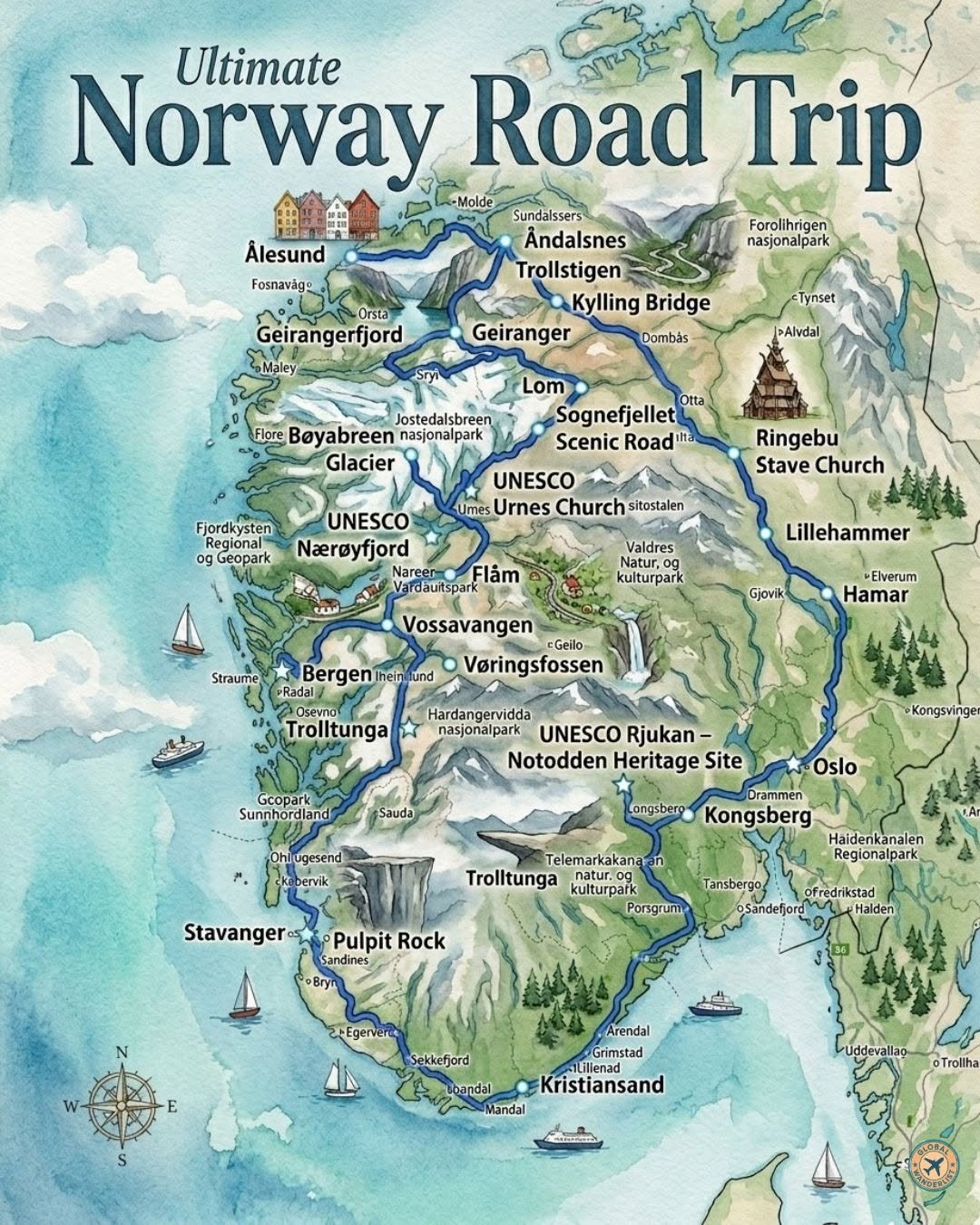
Picture a loop that links Norway’s greatest hits in one unforgettable drive. You start in Oslo, cross the mountains to the southern coast, and follow the fjords north. Then you wind up Trollstigen and return through valleys of medieval churches. Few Norway road trip routes offer this much variety in about 1,800 miles.
Expect sheer cliffs, glacier views, UNESCO sites, and charming harbor towns. You will also meet hairpin roads, ferry crossings, and long tunnels. This loop suits active travelers, photographers, hikers, and anyone who loves scenic drives. Late May to September is best, because mountain passes and many hikes are only open in summer.
Norway Road Trip at a Glance
Distances and times are approximate and include ferries where noted. Always check ferry timetables and road status before each leg.
| Stop | Distance from Previous Stop | Driving Time | Main Highlights | Recommended Stay Duration |
|---|---|---|---|---|
| Oslo | Start | Start | Opera House, Vigeland Park, Akershus Fortress | 2 days |
| Kongsberg | 50 mi (80 km) | 1.25 hours | Silver mines, old town, Lågen river | Half day |
| Rjukan and Notodden | 85 mi (140 km) | 2.25 hours | Industrial heritage, Gaustatoppen, Sun Mirrors | 1 day |
| Kristiansand | 175 mi (280 km) | 4.25 hours | Fiskebrygga, Posebyen, southern beaches | 1 day |
| Stavanger | 155 mi (250 km) | 3.25 hours | Old Stavanger, Gamle Stavanger, street art | 1.5 days |
| Pulpit Rock | 28 mi (45 km) | 1.5 hours with ferry | Preikestolen hike, Lysefjord views | 1 day |
| Trolltunga | 190 mi (305 km) | 4.5 hours with ferries | Trolltunga hike, Hardangerfjord, Odda | 1 to 2 days |
| Bergen | 120 mi (190 km) | 3.5 hours | Bryggen, Fløibanen, Fish Market | 2 days |
| Voss | 60 mi (100 km) | 1.5 hours | Adventure sports, Voss Gondol, lake views | Half day |
| Vøringsfossen | 50 mi (80 km) | 1.5 hours | Waterfall, Hardangervidda edge, Eidfjord | Half day |
| Flåm | 90 mi (145 km) | 2.5 hours | Flåm Railway, Aurlandsfjord, harbor | 1 day |
| Nærøyfjord | 14 mi (23 km) | 30 minutes | UNESCO fjord, Gudvangen, kayaking | Half day |
| Urnes Stave Church | 75 mi (120 km) | 2.5 hours with ferry | UNESCO stave church, Solvorn, Lustrafjord | Half day |
| Bøyabreen Glacier | 55 mi (90 km) | 2 hours with ferry | Glacier views, Fjærland, book town | Half day |
| Sognefjellet Scenic Road | 65 mi (105 km) | 2 hours | High mountain pass, Skjolden, glacier lakes | Half day |
| Lom | 65 mi (105 km) | 1.5 hours | Stave church, Norwegian Mountain Centre, bakery | Half day |
| Geiranger and Geirangerfjord | 60 mi (95 km) | 1.75 hours | Fjord, Seven Sisters, Dalsnibba | 1 day |
| Ålesund | 90 mi (145 km) | 3 hours with ferry | Art Nouveau center, Aksla viewpoint | 1 day |
| Åndalsnes | 85 mi (135 km) | 2.5 hours | Romsdalen valley, Rauma railway, hiking | Half day |
| Trollstigen | 12 mi (20 km) | 30 minutes | Hairpin road, Stigfossen, viewing platform | Half day |
| Kylling Bridge | 12 mi (20 km) | 25 minutes | Historic stone arch, Rauma river | 1 hour |
| Ringebu Stave Church | 125 mi (200 km) | 2.75 hours | Medieval stave church, Gudbrandsdalen | Half day |
| Lillehammer | 40 mi (65 km) | 50 minutes | Maihaugen, Olympic sites, Mjøsa lake | 1 day |
| Hamar | 40 mi (65 km) | 50 minutes | Viking Ship arena, Domkirkeodden, lakefront | Half day |
The drive ends back in Oslo, about 70 miles (113 km) and 1.25 hours from Hamar.
Oslo
Norway’s capital is a relaxed waterfront city where design, history, and green space sit side by side. Fjord views are never far away. Spend a day or two here before the long drive. Many travelers pick up the rental car on departure day, since central parking is pricey.
Where to Eat in Oslo
- Smalhans: Modern Norwegian, $$$
- Kaffistova: Traditional Norwegian home cooking, $$
- Tim Wendelboe: Specialty coffee and pastries, $$
- Haralds Vaffel: Waffles and sweet treats, $
What to See in Oslo
- Oslo Opera House: Walk up the sloping marble roof for harbor views. It is free and glows at sunset.
- Vigeland Sculpture Park: More than 200 sculptures fill this large park. Allow about 90 minutes.
- Akershus Fortress: This medieval castle overlooks the harbor. The grounds are free and great for photos.
- Munch Museum: A huge collection of Edvard Munch’s work fills the waterfront building. Book ahead in summer.
- Fram Museum: Climb aboard the polar ship that carried famous expeditions. It is a fun, hands-on visit.
Kongsberg
Kongsberg grew rich on silver mining in the 1600s, and that history still shapes the town. Old mine tunnels, a handsome church, and a river running through the center give it character. It is an easy first stop out of Oslo. Fuel up here, since the next section crosses quiet countryside.
Where to Eat in Kongsberg
- Scandic Kongsberg restaurant: Norwegian, $$
What to See in Kongsberg
- Kongsberg Silver Mines (Sølvverkene): A mine train carries visitors deep into the mountain. Wear warm layers, since it stays cool inside.
- Kongsberg Church: This large baroque church is among Norway’s most richly decorated. Its organ and ornate interior reward a short visit.
- Norwegian Mining Museum: Exhibits explain the silver boom and the town’s industrial past. It is a good option for a rainy day.
- Lågen River Promenade: A short riverside walk shows the town at an easy pace. It is lovely in soft evening light.
Rjukan and Notodden
Rjukan and Notodden form a UNESCO World Heritage site for early industrial hydropower and fertilizer production. Rjukan sits in a deep valley that gets little winter sun. Mountains rise steeply on every side. The roads here are scenic but slow, so allow extra time. Winter driving needs proper tires and care on icy bends.
Where to Eat in Rjukan and Notodden
- Gaustablikk Høyfjellshotell restaurant: Norwegian mountain cooking, $$$
What to See in Rjukan and Notodden
- Rjukan Sun Mirrors: Large mirrors on the mountain reflect sunlight into the town square. They are a clever fix for a sun-starved valley.
- Vemork Hydroelectric Plant: The power station is now a museum with famous WWII history. Allow about two hours.
- Gaustatoppen: This peak offers one of Norway’s widest mountain views. A tunnel railway shortens the climb.
- Notodden Industrial Sites: The old factory district shows how hydropower changed the region. Notodden also hosts a well-known blues festival each year.
Kristiansand
Kristiansand is Norway’s southern capital, known for warm summers and sandy beaches. The compact center is easy to walk, with a lively harbor and timber streets. Day drives to nearby coves are a pleasure. Parking is simple near the waterfront. The beach season peaks in July and August.
Where to Eat in Kristiansand
- Smag & Behag: Modern shared plates, $$$
- Hos Moi: Brasserie and wine-led dinners, $$$
- dela:: Seafood and wine bistro, $$$
- Tiara Kaffebrenneri: Coffee roaster and café, $
What to See in Kristiansand
- Fiskebrygga: This wooden wharf buzzes with cafés and seafood. It is the best spot for an easy lunch by the water.
- Posebyen: Europe’s largest area of low wooden houses lines these quiet streets. Wander it for relaxed, photogenic views.
- Ravnedalen Park: A green valley with trails and a short viewpoint hike. It is lovely on a sunny afternoon.
- Christiansholm Fortress: This round stone fort stands in the harbor. A short walk reaches it.
- Bystranda City Beach: A sandy beach sits steps from downtown. It is a pleasant place to unwind.
Stavanger
Stavanger is a harbor city with colorful wooden houses, street art, and a serious food scene. It is also the oil capital of Norway. Old Stavanger preserves rows of white 18th-century homes. The pace is easy and the harbor is lively. Drive times here are short, but ferries link the surrounding fjords.
Where to Eat in Stavanger
- RE-NAA: Seafood tasting menus, $$$$
- Hermetikken: Modern Nordic tasting menus, $$$$
- Fisketorget Stavanger: Seafood, $$$
- Skagen Fiskerestaurant: Seafood by the harbor, $$$
What to See in Stavanger
- Gamle Stavanger: The preserved wooden district is a charming maze of cobbled lanes. It is best explored on foot.
- Stavanger Cathedral: This medieval cathedral is one of Norway’s oldest. It sits right in the city center.
- Street Art Walk: Large murals brighten walls around Nedre Holmegate and the harbor. The colorful lanes make great photos.
- Norwegian Petroleum Museum: Interactive exhibits explain the offshore industry. It is a clever look at modern Norway.
- Sverd i Fjell: Three giant swords honor a Viking-age battle. They stand by the water for a striking photo.
Pulpit Rock
Pulpit Rock (Preikestolen) is a flat cliff rising about 1,980 feet above Lysefjord. It is one of Norway’s best-known hikes. The trail is roughly 5 miles round trip and takes about four hours. Start early to avoid crowds. Wear sturdy shoes, bring water, and check the weather first.
Where to Eat at Pulpit Rock
- Preikestolen Fjellstue: Norwegian mountain lodge dining, $$
- Preikestolhytta café: Light meals and coffee, $
What to See at Pulpit Rock
- Preikestolen Plateau: The flat top gives vast fjord views. Stay well back from the edge, especially in wind.
- Trailhead Viewpoints: The path climbs through forest, lakes, and rock steps. Pause often for photos.
- Lysefjord Cruise: Boat trips from Stavanger show the cliffs from below. They are a good option on rainy days.
- Kjerag Boulder Area: A tougher hike reaches the famous wedged boulder. It suits experienced hikers in good weather.
Trolltunga
Trolltunga is a slim rock ledge jutting over Ringedalsvatnet lake. The hike is demanding, about 17 miles round trip, and takes 10 to 12 hours. It is usually open from June to September. Check conditions and start before sunrise. The nearby town of Odda is a handy base on Hardangerfjord.
Where to Eat at Trolltunga
- Trolltunga Hotel restaurant: Norwegian, $$
What to See at Trolltunga
- Trolltunga Rock Ledge: The ledge is the iconic Norwegian photo spot. Expect a queue in peak season.
- Skjeggedal Trailhead: The hike begins here, with a steep first climb. Parking fills early in summer.
- Hardangerfjord: The fjord is known for blossoming orchards in spring. A slow drive along its shore is lovely.
- Låtefossen Waterfall: This twin waterfall thunders beside the road. It makes an easy and rewarding stop.
- Odda Town Walk: A short stroll reveals old industrial buildings against mountain backdrops. It is a quiet way to rest after the hike.
Bergen
Bergen is the gateway to the western fjords. Colorful wooden houses line the old wharf, and mountains rise right behind the city. Expect rain, even in summer. A light waterproof jacket is wise. Park at a garage and explore on foot.
Where to Eat in Bergen
- Bryggen Tracteursted: Traditional Norwegian, $$$
- Pingvinen: Norwegian comfort food, $$
- To Kokker: Seafood and modern Norwegian, $$$
- Lysverket: Modern Norwegian tasting menus, $$$$
What to See in Bergen
- Bryggen Wharf: This UNESCO-listed row of Hanseatic buildings is Bergen’s signature sight. Explore the back alleys for atmosphere.
- Fløibanen Funicular: The short ride rises high above the harbor. Come at golden hour for the best view.
- Fish Market: Sample smoked salmon and fish cakes by the water. It is a lively lunch stop.
- Mount Ulriken: A cable car lifts you to a broad summit. Clear days reward you with huge fjord views.
- Bergenhus Fortress: These historic grounds sit at the harbor entrance. They are calm and good for an easy walk.
Voss
Voss is a lakeside town famous for adventure sports and winter skiing. It is also a handy stop on the way inland. The setting is green and fresh, with lakes and mountains close by. Fuel and groceries are easy to find here. Summer brings paragliding, rafting, and cycling.
Where to Eat in Voss
- Fleischer’s Hotel restaurant: Norwegian, $$$
What to See in Voss
- Voss Gondol: The gondola rises quickly to Hangur for broad views. A mountain café waits at the top.
- Vangsvatnet Lake Promenade: A relaxed lakeside stroll shows Voss at its calmest. It is lovely at sunset.
- Voss Church: This stone church dates to the 1200s. Its interior is simple and atmospheric.
- Adventure Activities: Rafting, kayaking, and paragliding operate in summer. Book ahead if you want a guided trip.
Vøringsfossen
Vøringsfossen drops about 600 feet into the Måbødalen gorge. It is one of Norway’s most dramatic waterfalls. A viewing platform and bridge make it easy to enjoy. The road passes near the Hardangervidda plateau, so weather can change fast. Allow an hour for views and photos.
Where to Eat at Vøringsfossen
- Fossli Hotel restaurant: Norwegian, $$$
What to See at Vøringsfossen
- Waterfall Viewing Platform: Several overlooks show the falls from different angles. Morning light is softer and less crowded.
- Måbødalen Gorge: The old road winds down the valley with sharp bends. It makes a scenic short hike.
- Hardangervidda National Park Edge: Open mountain plateau stretches beyond the road. It feels wild and wide.
- Eidfjord Village: This fjord village sits at the valley’s base. It is a pleasant coffee stop.
Flåm
Flåm is a small fjord village famous for its steep railway. The Aurlandsfjord is calm and deep, and cruise ships stop here in summer. Plan to arrive early to enjoy the quiet before crowds. Parking near the harbor can fill, so use the larger lots. Fuel up in Voss or Aurland.
Where to Eat in Flåm
- Ægir Bryggeri & Pub: Norwegian pub dining, $$
- Flåmsbrygga Restaurant: Norwegian, $$$
- Flåm Bakery: Baked goods and coffee, $
What to See in Flåm
- Flåm Railway (Flåmsbana): This steep scenic train climbs 2,800 feet in about an hour. Book ahead in summer.
- Aurlandsfjord Cruise: Boats glide beneath towering cliffs. Quiet electric ships offer a gentle ride.
- Stegastein Viewpoint: A glass-edged platform juts out over the fjord. It is a short drive from Flåm.
- Flåm Railway Museum: Exhibits tell how the line was built. It is quick, interesting, and free to browse.
Nærøyfjord
Nærøyfjord is a UNESCO World Heritage fjord, narrow and steep, with waterfalls pouring from the walls. At its narrowest, it is only about 800 feet wide. Gudvangen sits at the head of the fjord. The drive from Flåm is short but beautiful. Kayak tours and fjord boats give a close-up view.
Where to Eat at Nærøyfjord
- Gudvangen Fjordtell restaurant: Norwegian, $$
What to See at Nærøyfjord
- Nærøyfjord Cruise: Boats cruise between steep cliffs and hanging waterfalls. Electric vessels keep the fjord peaceful.
- Fjord Kayaking: Paddling reveals scale and silence you cannot feel from a car. Guided tours suit beginners.
- Gudvangen Viking Village: A recreated Viking settlement offers hands-on activities. It is a good fit for families.
- Stalheim Viewpoint: The overlook shows a long, steep valley. The old road has dramatic hairpins.
Urnes Stave Church
Urnes Stave Church is the oldest stave church in Norway and a UNESCO World Heritage site. It sits on a hillside above Lustrafjord. Intricate carvings of beasts and vines cover its north wall. Reach it by a short ferry from Solvorn. Visits are usually available from late spring to early autumn.
Where to Eat at Urnes Stave Church
- Walaker Hotell restaurant: Norwegian, $$$
What to See at Urnes Stave Church
- Urnes Stave Church: Its carved doors and wall panels are unlike any other church. Join a guided tour for the story.
- Solvorn Ferry Crossing: The short crossing gives sweet views of the fjord. It is a charming way to arrive.
- Lustrafjord Scenery: This arm of the Sognefjord is quiet and deep. Pull-outs offer easy photo stops.
- Walaker Estate Gardens: The historic farm lies near Solvorn. It offers a calm walk among old buildings.
Bøyabreen Glacier
Bøyabreen is an arm of Jostedalsbreen, the largest glacier on mainland Europe. A short walk leads from the parking area toward the glacier edge. Fjærland, nearby, is known as a village of books. Weather can be wet and cool even in summer. A tunnel connects the area to Sogndal.
Where to Eat at Bøyabreen Glacier
- Hotel Mundal restaurant: Norwegian, $$$
- Norwegian Glacier Museum café: Light meals and coffee, $$
What to See at Bøyabreen Glacier
- Bøyabreen Viewpoint: A short, easy walk reaches the glacier front. Stay on marked paths for safety.
- Norwegian Glacier Museum: Exhibits explain how glaciers shape the landscape. It is a good rainy-day option.
- Fjærland Book Town: Old barns and shops are filled with used books. It is a quiet, charming browse.
- Fjærlandsfjord Views: The fjord stays calm and mirror-like on still days. It is wonderful for photos.
Sognefjellet Scenic Road
The Sognefjellet road is Norway’s highest mountain pass, topping out around 4,700 feet. It links Skjolden and Lom through bare, rocky terrain. Snow can linger into June, and the road closes in winter. Fuel up before the climb. Wind and fog are common, so drive carefully.
Where to Eat on the Sognefjellet Scenic Road
- Turtagrø Hotel restaurant: Norwegian, $$$
- Sognefjellhytta: Mountain lodge meals, $$
What to See on the Sognefjellet Scenic Road
- Sognefjellet Summit: The high plateau feels like another planet. Stop for photos of snowfields and ponds.
- Skjolden Fjord Views: The road begins at the head of the Sognefjord. It is a fine start to the climb.
- Glacier Lakes: Small lakes at the base of snowy peaks make a stark foreground. They are especially pretty in soft light.
- Turtagrø Mountain Lodge: This historic lodge has a long climbing tradition. Stop for coffee and mountain talk.
Lom
Lom is a small mountain village in a wide valley, often called a gateway to Jotunheimen. A timber stave church sits at its heart. A beloved bakery draws travelers every day. The area is a good base for Jotunheimen hikes. Services are limited in remote stretches, so restock here.
Where to Eat in Lom
- Bakeriet i Lom: Bakery café, $
- Fossheim Turisthotell restaurant: Norwegian, $$$
What to See in Lom
- Lom Stave Church: This 12th-century church has dark timber and a striking roofline. Its interior is quiet and memorable.
- Norwegian Mountain Centre: Exhibits cover mountain wildlife and climbing history. It is great for families.
- Bøverdalen Valley: A short drive reveals deep valleys and steep peaks. It is a lovely detour.
- Local Craft Shops: Small shops sell wool, pottery, and food. They make easy souvenir stops.
Geiranger and Geirangerfjord
Geirangerfjord is a UNESCO fjord with sheer walls and famous waterfalls. The village of Geiranger sits at its head, and cruise ships visit often. The drive in from Lom is spectacular and uses steep, winding roads. Brakes and fuel matter here. Arrive early or late to avoid peak cruise crowds.
Where to Eat in Geiranger and Geirangerfjord
- Hotel Union restaurant: Norwegian, $$$
- Café Ole: Casual cafe fare, $$
What to See in Geiranger and Geirangerfjord
- Geirangerfjord Cruise: Boats pass the Seven Sisters and Suitor waterfalls. It is the best way to feel the fjord’s scale.
- Flydalsjuvet Viewpoint: A rocky ledge gives the classic fjord photo. Come in late afternoon for softer light.
- Dalsnibba Viewpoint: A toll road climbs to a high plateau above the fjord. Dress warmly, since it is cold at the top.
- Ørnesvingen Eagle Bend: A famous hairpin overlook gives sweeping fjord views. It is a quick, rewarding stop.
- Geiranger Fjord Center: Exhibits explain the fjord’s geology and farm history. It is a good rainy-day stop.
Ålesund
Ålesund rebuilt itself in Art Nouveau style after a devastating fire in 1904. The result is a harbor town of turrets, spires, and pastel facades. Mountains and islands frame the skyline. The drive from Geiranger includes a short ferry, so leave a buffer. Parking garages near the center are easy.
Where to Eat in Ålesund
- Apotekeren: Modern Nordic bistro, $$$
- Fisketorget: Seafood, $$$$
- Sjøbua Fiskerestaurant: Seafood, $$$
What to See in Ålesund
- Art Nouveau District: Walk the streets around Brosundet for the best architecture. Early light is best for photos.
- Aksla Viewpoint: Climb 418 steps, or drive up, for the classic skyline view. Sunset is a favorite time to go.
- Atlanterhavsparken: This large aquarium sits by the sea. It suits families and rainy afternoons.
- Alnes Lighthouse on Giske: Cross the undersea tunnel to this coastal beacon. The ocean views are best in stormy weather.
- Jugendstilsenteret: This museum explores the town’s Art Nouveau story. It complements the street walk well.
Åndalsnes
Åndalsnes sits at the head of Romsdalsfjord, ringed by sharp peaks. Trollveggen, Europe’s tallest vertical rock face, rises nearby. The town is a hub for hiking and climbing. The Rauma Railway runs south through the valley. It is a good base for Trollstigen, which is usually open from late May to October.
Where to Eat in Åndalsnes
- Hotel Aak restaurant: Norwegian, $$$
What to See in Åndalsnes
- Romsdalseggen Ridge: This famous ridge hike offers huge views. It is best for fit hikers in stable weather.
- Rauma Railway: The scenic line runs through dramatic valley scenery. Short rides are popular with photographers.
- Trollveggen Viewpoint: A viewpoint shows the vast vertical wall. It is a quick stop beside the road.
- Åndalsnes Harbor Walk: A calm waterfront stroll shows the town at ease. It is lovely at dusk.
Trollstigen
Trollstigen, the Troll’s Path, is a mountain road with 11 hairpin bends and a steep 10 percent grade. A viewing platform hangs over the valley, and a waterfall crashes beside the road. The road is closed in winter and often delayed by snow into spring. Vehicles over 41 feet are not allowed. Drive slowly and use low gear on descents.
Where to Eat at Trollstigen
- Trollstigen Kafe: Local dishes and quick bites, $
What to See at Trollstigen
- Trollstigen Viewing Platform: Modern walkways extend over the valley. They give a thrilling view of the hairpins.
- Stigfossen Waterfall: The waterfall crashes beside the road and mists the bridge. Bring a jacket.
- Hairpin Photo Stops: Several pull-outs show the road’s switchbacks. Late afternoon light is flattering.
- Alnesvatnet Overlook: A calm viewpoint near the top shows the open mountain landscape. It is a peaceful pause.
Kylling Bridge
Kylling Bridge is a graceful stone arch crossing the Rauma river. It was built in the 1920s for the Rauma Railway and stands about 200 feet long. The setting is quiet, with forest and rushing water below. It is a short, easy stop between Åndalsnes and the long drive east.
Where to Eat at Kylling Bridge
- Trollstigen Kafe (nearby, seasonal): Quick bites, $
What to See at Kylling Bridge
- Kylling Bridge Viewpoint: A short walk reveals the bridge’s arch against the valley. It is a favorite photo spot.
- Rauma River Gorge: The river rushes through narrow rock walls. It is loud and dramatic after rain.
- Rauma Railway Line: Trains cross the arch in warm months. The timing makes a fun photo chance.
- Romsdalen Valley Drive: The route east shows towering peaks and quiet farms. Pull over for easy photo stops.
Ringebu Stave Church
Ringebu Stave Church dates to the 1200s and ranks among Norway’s best-preserved wooden churches. Its stacked roofs and dark timbers are unforgettable. The setting is calm and green in Gudbrandsdalen valley. Visits run from late spring to early autumn. Fuel up in Otta or Vinstra along the way.
Where to Eat at Ringebu Stave Church
- Sygard Grytting: Norwegian farm dining, $$$
What to See at Ringebu Stave Church
- Ringebu Stave Church: Its layered wooden roofs make a striking silhouette. Inside, the timbers are quiet and atmospheric.
- Gudbrandsdalen Valley Drive: Green farmland and river views line the road. It is a pleasant, easy drive.
- Local Farm Shops: Stops along the route sell cheese, cured meats, and breads. They are great for road snacks.
- Churchyard Walk: A short stroll around the grounds shows the church from several angles. It is lovely in soft light.
Lillehammer
Lillehammer hosted the 1994 Winter Olympics and still carries that sporting legacy. The town sits by Lake Mjøsa, with a walkable center and a famous open-air museum. It is a pleasant place to rest before the final leg. Parking is simple near the main street. Winter brings ski crowds, so book ahead.
Where to Eat in Lillehammer
- Hotel Breiseth restaurant: Norwegian, $$$
What to See in Lillehammer
- Maihaugen Open-Air Museum: Historic buildings from across the region show Norwegian life. It is one of the country’s best museums.
- Lysgårdsbakken Ski Jump: The Olympic ski jump offers wide views. Take the chairlift and short walk.
- Storgata Pedestrian Street: This colorful street is lined with cafés and shops. It is perfect for a slow afternoon.
- Lake Mjøsa Cruise: Historic steamers sail on Norway’s largest lake. Check the summer schedule.
- Olympic Park: Venues from 1994 remain open for visits. Families love the interactive exhibits.
Hamar
Hamar sits on the shore of Lake Mjøsa and is known for its Olympic Viking Ship arena. Medieval ruins and a lakeside promenade add history and calm. It is an easy final stop before returning to Oslo. The drive from Lillehammer is quick. Fuel is easy to find along the main road.
Where to Eat in Hamar
- Scandic Hamar restaurant: Norwegian, $$
What to See in Hamar
- Viking Ship Olympic Arena: The hull-shaped arena was built for the 1994 Winter Games. It is a striking landmark.
- Domkirkeodden Museum: Ruins of a medieval cathedral sit on the lake shore. A modern glass shelter protects the remains.
- Hamar Lakefront: A long promenade runs along Lake Mjøsa. It is lovely at golden hour.
- Norwegian Railway Museum: Vintage trains and exhibits draw families. It is a fun, easy stop.
Plan Your Norway Road Trip
This loop rewards patience, flexibility, and early starts. Ferries, mountain passes, and weather shape each day, so leave room in your schedule. Fill the tank before long mountain stretches, and register your car for tolls. Pack layers, since conditions change quickly in the mountains.
Start in Oslo, follow the fjords, and finish with stave churches and lakes on the way home. Pick your season, book key ferries and hikes, and begin a drive you will remember.