
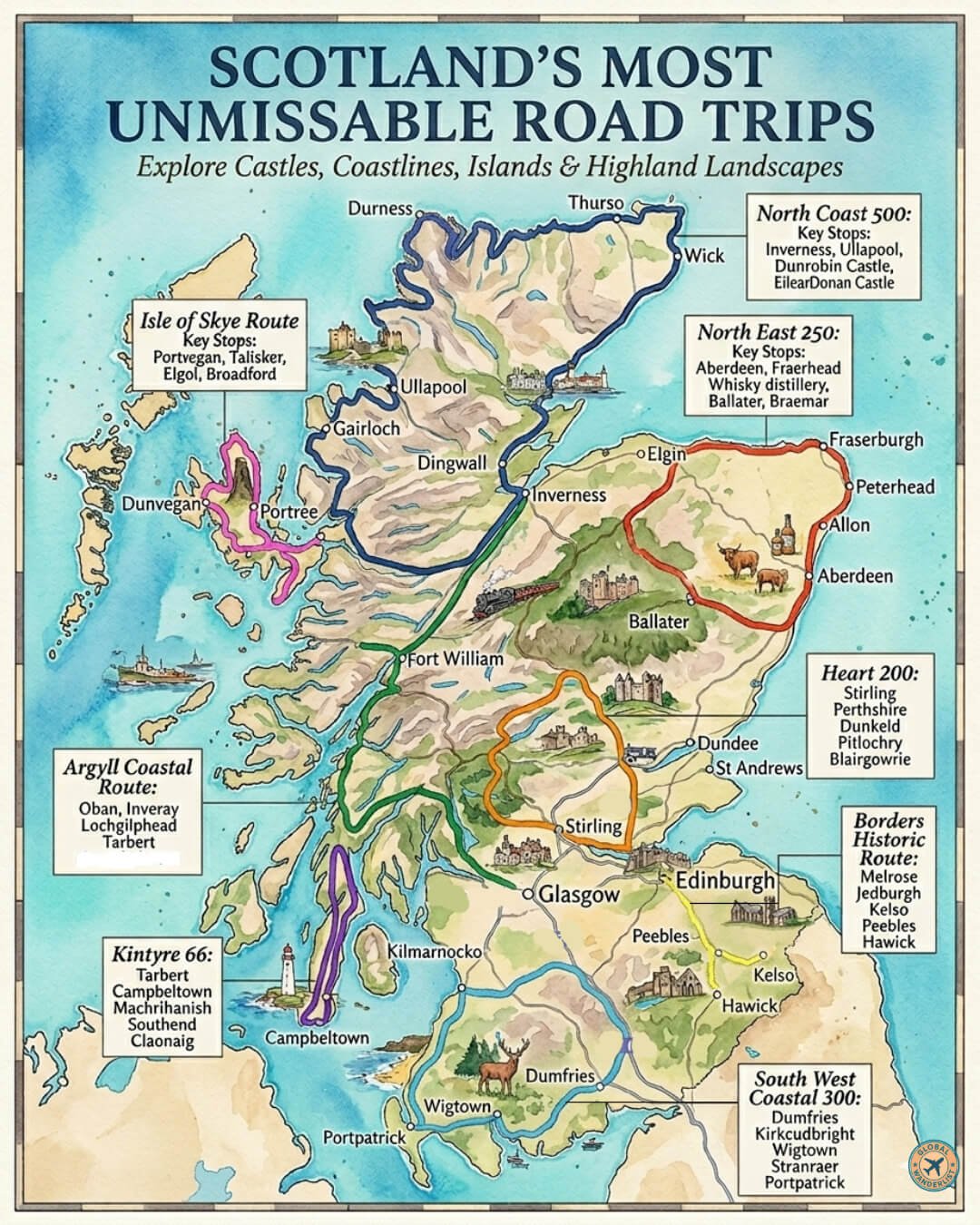
Scotland holds more castles per square mile than almost anywhere else on earth. This route strings together fairy-tale towers, royal residences, and clifftop ruins across the length of the country.
This drive suits history lovers, photographers, and travelers who want Scotland’s dramatic scenery paired with centuries of story. The pace moves from the Lowlands through the northeast coast, up to the far north, and back across to the Isle of Skye. Few road trips anywhere pack in this much architecture and landscape at once.
Starting in Glasgow, the route climbs through Stirling and Edinburgh before tracing the east coast up to Scotland’s northern tip, then swings west toward Eilean Donan and Skye. Below is a full breakdown of what to see, where to eat, and how to drive this route at its best.
Scotland Castles Road Trip at a Glance
| Stop | Distance from Previous Stop | Driving Time | Main Highlights | Recommended Stay Duration |
|---|---|---|---|---|
| Glasgow | Starting point | N/A | Victorian architecture, museums | Half day |
| Stirling | 30 miles | About 45 minutes | Stirling Castle, Wallace Monument | Half day |
| Edinburgh | 37 miles | About 50 minutes | Edinburgh Castle, Old Town | 1-2 days |
| Glamis (via Dundee) | 66 miles | About 1 hour 20 minutes | Glamis Castle, V&A Dundee | Half day |
| St Andrews | 17 miles | About 25 minutes | Cathedral ruins, the Old Course | Half day |
| Dunnottar Castle (Stonehaven) | 46 miles | About 55 minutes | Clifftop castle ruins | 1-2 hours |
| Craigievar Castle (Aberdeen) | 32 miles | About 45 minutes | Pink fairy-tale tower castle | 1-2 hours |
| Balmoral Castle (Ballater) | 32 miles | About 45 minutes | Royal Highland retreat | Half day |
| Inverness | 63 miles | About 1 hour 20 minutes | River Ness, Highland capital | Half day |
| Dunrobin Castle (Golspie) | 51 miles | About 1 hour | Loire-style castle and gardens | Half day |
| Castle of Mey (Thurso) | 46 miles | About 55 minutes | Queen Mother’s former retreat | 1-2 hours |
| Eilean Donan Castle (Dornie) | 106 miles | About 2 hours 15 minutes | Scotland’s most photographed castle | 1-2 hours |
| Dunvegan Castle (Isle of Skye) | 55 miles | About 1 hour 20 minutes | Ancient seat of Clan MacLeod | Half day |
Glasgow
Glasgow anchors the start of this route with its own layered history of trade, industry, and Victorian ambition. Grand sandstone buildings reflect the wealth once generated by shipbuilding along the Clyde. The city makes a practical launch point, with major highways heading north toward the Highlands and castle country.
Where to Eat in Glasgow
- Ubiquitous Chip — Scottish, $$$. A long-running West End institution known for seasonal Scottish cooking in a plant-filled courtyard setting.
- The Gannet — Scottish, $$$. A Finnieston favorite praised for its seasonal tasting menus built around Scottish produce.
- Crabshakk — Seafood, $$$. A small, highly rated spot known for oysters and simply prepared fresh fish.
What to See in Glasgow
- Kelvingrove Art Gallery and Museum. This grand building houses an extensive collection spanning fine art to natural history, with free entry.
- The Riverside Museum. This striking building along the Clyde traces Glasgow’s transport and industrial heritage.
- The West End. This neighborhood offers independent shops, cafes, and a lively university atmosphere.
- George Square. This central civic square anchors much of the city’s public life and architecture.
Stirling
Stirling played a pivotal role in Scotland’s wars of independence, sitting at a strategic crossing point between the Highlands and Lowlands. Its castle rivals Edinburgh’s in historical significance, having hosted numerous Scottish monarchs. The surrounding battlefields tell the story of key moments in the nation’s history.
Where to Eat in Stirling
- Brea Restaurant — Scottish, seafood, $$$. Award-winning restaurant repeatedly recognized as one of Scotland’s top dining destinations, known for contemporary Scottish seafood.
- Fletchers — Scottish, $$. Voted one of Stirling’s best restaurants, offering a hearty three-course menu suitable for the whole family.
- Friars Wynd — Scottish, British, $$. A well-regarded local favorite for classic dishes in a relaxed setting near the Old Town.
What to See in Stirling
- Stirling Castle. This Renaissance castle offers some of the best preserved royal architecture in the country.
- The Wallace Monument. This tower commemorates William Wallace and offers panoramic views from its summit.
- Bannockburn. This nearby battlefield marks the site of Robert the Bruce’s decisive 1314 victory.
- The Old Town. Stirling’s historic core features narrow closes and well preserved period buildings.
Edinburgh
Scotland’s capital blends medieval architecture with a lively modern culture. Its Old Town, a UNESCO World Heritage Site, has stood largely unchanged for centuries. Edinburgh Castle sits at the heart of this history, perched dramatically above the city on an extinct volcano.
Where to Eat in Edinburgh
- The Witchery by the Castle — Scottish, $$$$. This atmospheric restaurant near the castle gates is famous for candlelit, theatrical dining.
- Ondine — Seafood, $$$. A highly rated seafood restaurant in the Old Town, known for sustainable sourcing and expertly prepared shellfish.
- The Dogs — Scottish, $$. A relaxed New Town favorite serving generous, well-priced Scottish comfort food.
What to See in Edinburgh
- Edinburgh Castle. Perched on an extinct volcano, this fortress holds the Scottish Crown Jewels and centuries of history.
- The Royal Mile. This cobblestone street connects the castle to the Palace of Holyroodhouse.
- Arthur’s Seat. This extinct volcano rewards hikers with sweeping views after a moderate climb.
- Victoria Street. This curved, colorful street is one of the most photographed corners of the Old Town.
Glamis and Dundee
Glamis Castle holds a storied place in Scottish royal history as the childhood home of the late Queen Mother. Its turrets and towers rise dramatically from the flat Angus countryside, making it one of the most photogenic castles on the route. Nearby Dundee has transformed its waterfront around the striking V&A design museum, adding a modern contrast to the drive.
Where to Eat near Glamis and Dundee
- Newport Restaurant — Scottish, $$$. A converted Victorian station serving contemporary Scottish cuisine with River Tay views, a short drive from Dundee.
- Tayview Hotel — Scottish, $$. A well-reviewed, budget-friendly option popular for hearty local dishes.
- The Ship Inn, Broughty Ferry — Scottish, seafood, $$. A gastropub on the waterfront offering fresh seafood and scenic river views.
What to See in Glamis and Dundee
- Glamis Castle. This turreted castle has hosted Scottish royalty for centuries and remains a private family home today.
- V&A Dundee. This striking design museum anchors Dundee’s revitalized waterfront district.
- Discovery Point. This museum surrounds Captain Scott’s Antarctic exploration ship, docked permanently on the Tay.
- The Angus countryside. The flat farmland surrounding Glamis offers dramatic, unobstructed views of the castle from the approach road.
St Andrews
St Andrews holds a legendary place in golf history as the sport’s birthplace. Its university, founded in 1413, remains one of the oldest in the English speaking world. The town blends academic tradition with coastal charm along Scotland’s eastern shore, making it a fitting detour before continuing north.
Where to Eat in St Andrews
- The Seafood Ristorante — Seafood, $$$. A glass-walled restaurant overlooking the sea, known for elegant, beautifully presented dishes.
- Tailend St Andrews — Fish and chips, $$. A popular, well-reviewed spot for classic fish and chips near the town center.
- Bistro du Vin at Hotel du Vin St Andrews — Scottish, French, $$$. A refined bistro offering seasonal menus in a boutique hotel setting.
What to See in St Andrews
- The Old Course. Known as the Home of Golf, this course has hosted the sport since the 1400s.
- St Andrews Cathedral ruins. Once the largest cathedral in Scotland, these ruins offer striking coastal views.
- St Andrews Castle. These cliffside ruins add another layer of medieval history to the town.
- West Sands Beach. This wide, sandy beach stretches along the coast just outside the town center.
Dunnottar Castle
Dunnottar Castle ranks among Scotland’s most dramatic ruins, perched on a rocky headland battered by the North Sea. The fortress once safeguarded the Scottish Crown Jewels from Oliver Cromwell’s forces in the 17th century. Its clifftop setting near Stonehaven makes it one of the most photographed castles in the country.
Where to Eat near Dunnottar Castle
- The Tolbooth Seafood Restaurant — Seafood, $$$. A Stonehaven harbor institution serving fresh, expertly prepared seafood with sea views.
- The Bay Fish & Chips — Fish and chips, $. A beloved local chippy right on Stonehaven’s seafront, praised for consistently fresh fish.
- Carron Fish Bar — Fish and chips, $. Home of the deep-fried Mars bar and long recognized as one of Scotland’s top chip shops.
What to See in Dunnottar Castle
- The castle ruins. Dramatic stone walls rise directly from the cliffside, best photographed from the coastal path leading in.
- The approach walk. A short but steep path leads down and back up to the castle, offering sweeping coastal views along the way.
- Stonehaven Harbour. This charming harbor town offers a relaxed stop for lunch before or after the castle visit.
- Stonehaven Beach. This sandy beach makes a pleasant stretch for a walk before continuing north.
Craigievar Castle
Craigievar Castle stands out with its distinctive pink harled walls and fairy-tale turrets, often cited as an inspiration for Disney’s Cinderella Castle. Completed in 1626, it remains remarkably unaltered inside, preserving its original plaster ceilings and furnishings. Its compact size and vivid color make it one of the most memorable stops on the route.
Where to Eat near Craigievar Castle
- The Boat Inn, Aboyne — Scottish, $$. A cozy countryside pub offering hearty meals within easy reach of Craigievar.
- The Green Inn, Ballater — Scottish, $$$. A refined countryside restaurant popular with visitors exploring Royal Deeside.
- Milton Brasserie, Crathes — Scottish, $$. A well-regarded brasserie near Crathes Castle, convenient for a relaxed countryside lunch.
What to See near Craigievar Castle
- The castle exterior. The vivid pink harled walls and turrets make this one of the most photogenic castles in Scotland.
- The castle grounds. Surrounding woodland walks offer pleasant views back toward the castle’s distinctive silhouette.
- Aberdeen’s Old Town. A short drive away, Aberdeen’s granite architecture offers a contrasting stop along the coast.
- Royal Deeside. The scenic drive connecting Craigievar toward Balmoral passes through classic Highland countryside.
Balmoral Castle
Balmoral has served as the private Highland retreat of the British royal family since Queen Victoria purchased the estate in 1852. Its baronial architecture and expansive grounds reflect the Victorian romance with Highland scenery. The nearby village of Ballater grew up specifically to serve the castle and its royal visitors.
Where to Eat near Balmoral Castle
- The Balmoral Bar, Ballater — British, Scottish, $$. A cozy, welcoming pub known for hearty pies and friendly service.
- Lochnagar Indian Brasserie — Indian, $$. A highly rated, upmarket Indian restaurant offering a stylish dining experience in Ballater.
- The Rock Salt & Snow, Ballater — Cafe, $. A charming farm shop and cafe popular for lunch and baked goods.
What to See near Balmoral Castle
- Balmoral Castle grounds. The estate opens select areas to visitors seasonally, offering a rare glimpse into royal Highland life.
- Royal Deeside. This scenic stretch along the River Dee offers some of the most classic Highland scenery in the northeast.
- Ballater village. This charming town retains a strong royal connection and offers a pleasant stop for shopping and food.
- Lochnagar. This dramatic mountain overlooks the estate, offering serious hikers a challenging summit route.
Inverness
Inverness serves as the unofficial capital of the Scottish Highlands. Its compact city center sits along the River Ness, making it an easy base for exploring the surrounding region. The city’s Highland character comes through in its architecture, festivals, and proximity to legendary landscapes.
Where to Eat in Inverness
- Rocpool Restaurant — Scottish, $$$. A long-standing, highly rated favorite close to the River Ness, known for confident modern Scottish cooking.
- Cafe 1 — Scottish, $$$. A well-reviewed fine dining spot sourcing much of its produce from its own croft.
- Mustard Seed — Scottish, $$. A riverside restaurant known for creative modern Scottish dishes and warm service.
What to See in Inverness
- Inverness Castle. This red sandstone castle overlooks the river and city center from an elevated position.
- Loch Ness. Just outside the city, this famous loch draws visitors hoping to spot its legendary resident.
- Urquhart Castle. These ruins sit dramatically on the loch’s shore, making them one of the most photographed spots in the Highlands.
- Culloden Battlefield. This historic site marks the final Jacobite uprising in 1746 and offers deep historical context.
Dunrobin Castle
Dunrobin Castle rises from the Sutherland coastline with the fairy-tale turrets of a French chateau, a deliberate architectural choice by its 19th century designers. As the seat of the Earls and Dukes of Sutherland, it ranks among the largest houses in the Highlands. Formal gardens stretch down toward the sea, adding to its storybook appearance.
Where to Eat near Dunrobin Castle
- The Golspie Inn — British, Scottish, $$. A well-reviewed local restaurant offering hearty classics like beef bourguignon in a warm, friendly setting.
- Dunrobin Castle Tea Room — Cafe, $. Located on the castle grounds, convenient for a light lunch or afternoon tea after touring.
- Sutherland House, Golspie — Cafe, seafood, $$. A relaxed spot known for fresh local seafood and baked goods.
What to See near Dunrobin Castle
- Dunrobin Castle interior. Ornate rooms showcase generations of Sutherland family history and Victorian design.
- The formal gardens. These terraced gardens descend toward the sea, offering some of the most elegant castle grounds in Scotland.
- Falconry displays. Seasonal falconry demonstrations take place on the castle grounds, a popular draw for families.
- Golspie Beach. This quiet beach offers a peaceful coastal stop just beyond the castle grounds.
Castle and Gardens of Mey
The Castle of Mey sits near Scotland’s northernmost tip, purchased and restored by the Queen Mother in 1952 after she fell in love with the remote, windswept setting. It remained her beloved summer retreat for the rest of her life. Its position along the Pentland Firth offers views toward Orkney on clear days.
Where to Eat near the Castle of Mey
- The Y Not Bar and Grill, Thurso — Scottish, British, $$. A popular local spot for hearty meals within easy reach of the castle.
- Bord de l’Eau, Thurso — French, $$$. A well-regarded French restaurant offering a refined dining option in the far north.
- Le Bistro, Thurso — Cafe, $$. A cozy stop for coffee, light lunch, and baked goods before or after visiting the castle.
What to See near the Castle of Mey
- The Castle and Gardens of Mey. This restored castle offers an intimate look at the Queen Mother’s beloved Highland retreat.
- The walled garden. This sheltered garden defies the harsh northern climate with surprisingly vibrant plantings.
- The Pentland Firth coastline. Dramatic cliffs and strong tidal currents define this rugged stretch of coast.
- Dunnet Head. The northernmost point of mainland Britain sits nearby, offering sweeping views toward Orkney.
Eilean Donan Castle
Eilean Donan stands as perhaps the single most photographed castle in Scotland, its stone walls rising from a small tidal island where three sea lochs meet. Originally built in the 13th century, the castle was destroyed in 1719 and lay in ruins for two centuries before careful restoration in the early 1900s. Its picture-perfect setting has made it a fixture in film and tourism imagery worldwide.
Where to Eat near Eilean Donan Castle
- Loch Duich Hotel, Dornie — Scottish, $$. A welcoming local hotel restaurant offering hearty meals with views toward the castle.
- The Clachan Bar, Dornie — Pub, Scottish, $$. A cozy village pub popular with travelers passing through toward Skye.
- Kintail Lodge Hotel — Scottish, $$. A comfortable countryside option a short drive from the castle, known for generous portions.
What to See at Eilean Donan Castle
- The castle and footbridge. The arched stone footbridge leading to the island offers the classic, postcard view of the castle.
- The interior rooms. Restored chambers give visitors a sense of Highland clan life across several centuries.
- Loch Duich views. The surrounding lochs create a dramatic, ever-changing backdrop depending on light and tide.
- Sunset photography. Evening light on the castle and surrounding mountains draws photographers throughout the summer months.
Dunvegan Castle
Dunvegan Castle claims the title of the oldest continuously inhabited castle in Scotland, serving as the ancestral seat of Clan MacLeod for roughly 800 years. Its position on the Isle of Skye near Portree gives it a suitably dramatic Highland backdrop. Boat trips from the castle grounds sometimes spot seals basking near the shore.
Where to Eat near Dunvegan Castle
- Scorrybreac, Portree — Scottish, $$$$. An acclaimed, reservation-only restaurant in Portree known for inventive tasting menus built around local ingredients.
- Sea Breezes, Portree — Seafood, $$$. A long-standing favorite for fresh, simply prepared seafood overlooking the harbor.
- Dulse and Brose, Portree — Scottish, $$$. A well-reviewed restaurant known for hearty, home-style Scottish cooking.
What to See at Dunvegan Castle
- Dunvegan Castle interior. Centuries of Clan MacLeod history fill the castle’s rooms, including the legendary Fairy Flag.
- The castle gardens. Water gardens and woodland walks surround the castle, offering a peaceful contrast to its rugged setting.
- Seal boat trips. Short boat tours from the castle grounds often spot seals resting along the nearby shoreline.
- Portree harbor. This colorful harbor town makes a lively final stop for dinner after a day of castle touring.
Final Thoughts
This route captures Scotland at its most castle-rich, blending fairy-tale towers, royal retreats, and dramatic ruins across the length of the country. Each stop offers its own layer of history, architecture, or scenery worth the detour. Coastal drives connect the dots between stone walls and turrets in a way few other trips can match.
Use this itinerary as a solid framework for your own Scotland castle adventure. Build in extra time for photography stops, seafood lunches, and short walks along the way. This corner of the world rewards travelers willing to slow down and take it all in.