
Da Nang has grown from a quiet coastal stopover into one of Vietnam’s most popular destinations in its own right. Golden beaches, dramatic mountain pagodas, and a growing food scene all sit within a compact, easily navigable city. It also serves as the natural gateway to nearby Hoi An and Hue, making it a strong base for exploring central Vietnam.
This guide breaks Da Nang’s highlights into must-visit sights, food, experiences, and practical planning details. Whether you have a long weekend or a full week, it should help you build a well-paced itinerary around this coastal city.
Must-Visit Attractions in Da Nang
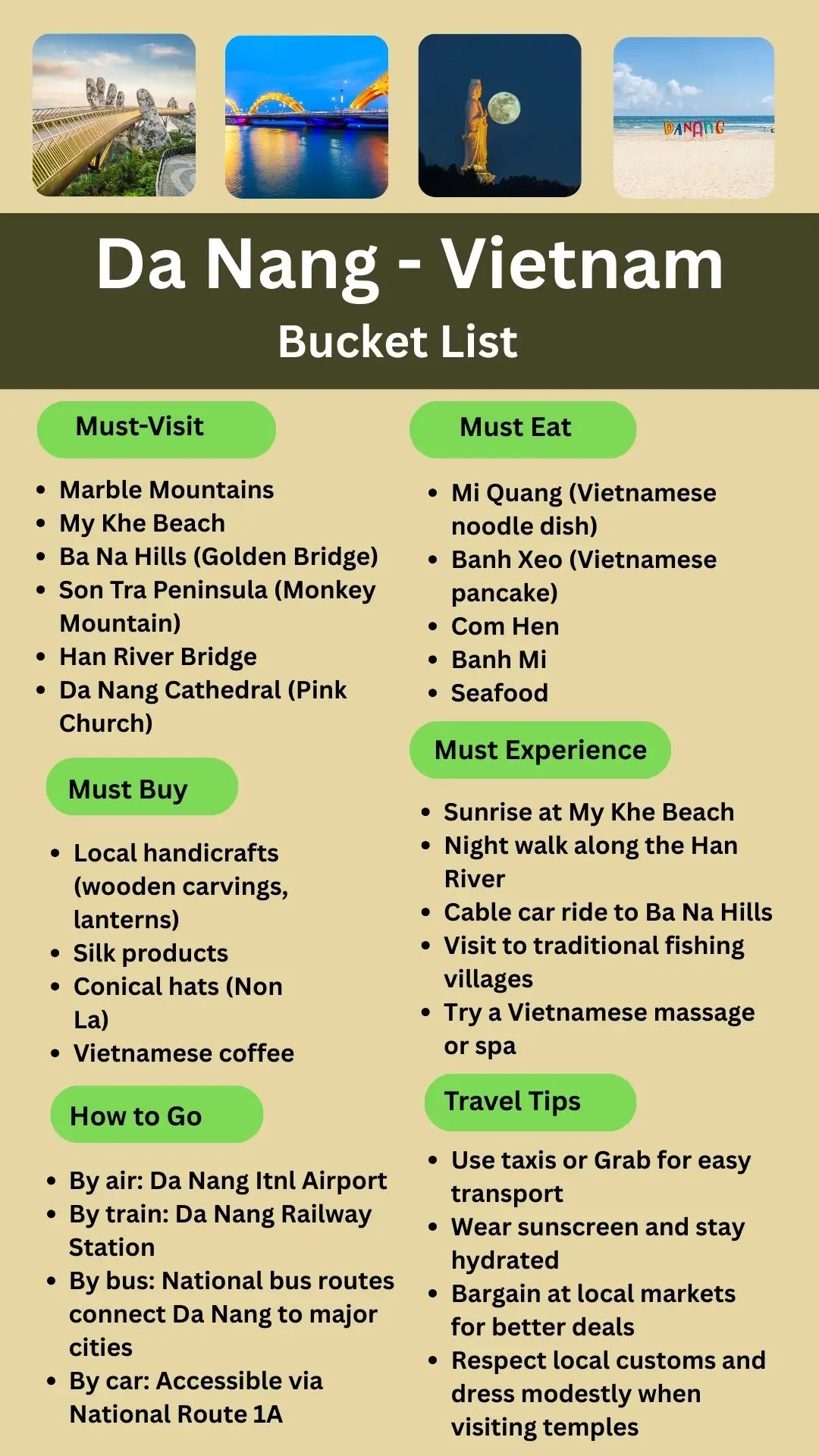
The Marble Mountains anchor much of Da Nang’s sightseeing, a cluster of five limestone and marble hills dotted with caves, pagodas, and panoramic viewpoints. My Khe Beach offers some of the best sand in the region, often cited among Vietnam’s most beautiful beaches. Ba Na Hills, home to the famous Golden Bridge held aloft by giant stone hands, has become one of the most photographed attractions in the entire country.
Son Tra Peninsula, also known as Monkey Mountain, offers dense forest and coastal views just outside the city center. The Han River Bridge and Da Nang Cathedral, known locally as the Pink Church for its distinctive color, round out a strong list of central city landmarks.
Planning Your Sightseeing Route
- Visit the Marble Mountains in the morning, since the caves and viewpoints get progressively hotter and busier as the day goes on.
- Dedicate a full day to Ba Na Hills, given the cable car journey and the sheer size of the hilltop complex.
- Combine My Khe Beach and Son Tra Peninsula into a single day, since both sit along the same general stretch of coastline.
Best Photo Spots
- Photograph the Golden Bridge at Ba Na Hills in the early morning, before crowds build and while mist often lingers around the giant hands.
- Capture the Han River Bridge at night, when its structure lights up in changing colors along the waterfront.
- Shoot Da Nang Cathedral’s pink facade in late afternoon light, when the color appears most vivid against the sky.
Must-Eat Food in Da Nang
Da Nang’s food scene reflects both its central Vietnamese roots and its position as a major coastal city. Mi Quang, a turmeric-infused noodle dish topped with pork, shrimp, and herbs, is considered the region’s signature specialty. Banh Xeo, a crispy stuffed pancake, and Com Hen, a rice dish made with tiny river clams, both showcase central Vietnam’s distinct culinary identity compared to the north or south.
Banh Mi remains a reliable option throughout the city, while Da Nang’s coastal location means fresh seafood is available almost everywhere, from casual street stalls to more upscale restaurants along the beach.
Where to Find the Best Local Dishes
- Try Mi Quang at a local, no-frills restaurant rather than a hotel restaurant, since the dish is best served fresh and unfussy.
- Sample Com Hen from a smaller family-run spot, since the dish requires careful preparation to balance its distinct textures.
- Look for seafood restaurants directly along My Khe Beach for the freshest catch paired with ocean views.
Food Safety and Practical Tips
- Choose busy stalls with high turnover when trying street food, since it generally indicates fresher ingredients.
- Carry hand sanitizer or wet wipes when eating at more casual street-side setups.
- Ask for dishes to be prepared less spicy if you are sensitive to heat, since central Vietnamese cuisine often leans spicier than northern dishes.
Must-Experience Activities in Da Nang
Da Nang’s experiences lean heavily into its coastal setting and dramatic surrounding landscape. Watching sunrise at My Khe Beach has become something of a local ritual, drawing both visitors and residents out early for the view. A night walk along the Han River offers a completely different atmosphere, with the city’s bridges lit up and street life picking up after dark.
The cable car ride to Ba Na Hills is an experience in itself, climbing through cloud forest before reaching the hilltop complex above. Visiting the area’s traditional fishing villages and relaxing with a Vietnamese massage or spa treatment round out a well-balanced list of things to do beyond straightforward sightseeing.
Timing These Experiences Right
- Set an early alarm for My Khe Beach sunrise, since the light is most dramatic in the thirty minutes right after dawn.
- Take the Han River night walk after dinner, when the bridges’ lighting displays are in full effect.
- Book the Ba Na Hills cable car for a weekday if possible, since weekends draw significantly larger domestic tourist crowds.
Making the Most of Local Experiences
- Visit a traditional fishing village early in the morning to see boats returning with the day’s catch.
- Book a massage or spa treatment toward the end of your stay, a relaxing way to unwind after days of sightseeing.
- Combine the Ba Na Hills cable car with lunch at the hilltop complex, since the journey itself takes up a significant portion of the day.
Must-Buy Souvenirs in Da Nang
Da Nang offers a solid range of souvenirs rooted in central Vietnamese craft traditions. Local handicrafts, including wooden carvings and lanterns, reflect the broader region’s strong artisan culture, particularly given the city’s proximity to Hoi An. Silk products remain popular here as well, though Hoi An itself generally offers a wider selection for dedicated shopping.
Conical hats, known locally as non la, make for a classic and practical souvenir, while Vietnamese coffee remains an easy, well-traveling gift for those back home.
Finding Good Souvenirs in Da Nang
- Look for wooden carvings and handicrafts at Han Market, one of the city’s main local shopping destinations.
- Buy conical hats directly from smaller local shops rather than tourist-heavy areas for better pricing.
- Purchase Vietnamese coffee in resealable packaging if traveling long distances afterward, to preserve freshness.
Combining Shopping with Sightseeing
- Pair a Han Market shopping trip with a walk along the nearby Han River Bridge.
- Save silk shopping for a day trip to Hoi An, since the town’s tailoring shops offer significantly more variety.
- Visit local shops near My Khe Beach for a more relaxed, less crowded shopping experience than the central market.
How to Get to Da Nang and Practical Travel Tips
Da Nang benefits from strong transportation connections, making it one of the more accessible cities in Vietnam. Da Nang International Airport offers direct flights from numerous domestic and international destinations. The Da Nang Railway Station connects the city to the broader national rail network, while National Route 1A provides a direct road link for those driving or taking long-distance buses.
Once in the city, getting around is generally straightforward, with several transportation options suited to different budgets and preferences.
Getting to Da Nang
- Fly into Da Nang International Airport for the fastest option, particularly if arriving from another region of Vietnam or internationally.
- Take a train into Da Nang Railway Station if you want a scenic overland journey, especially memorable along the coastal stretch from Hue.
- Consider a bus if traveling from a nearby city like Hoi An or Hue, since national routes connect Da Nang to most major destinations.
Getting Around Once You Arrive
- Use taxis or the Grab app for easy, metered transportation around the city, generally the most convenient option for visitors.
- Wear sunscreen and stay hydrated throughout the day, given Da Nang’s consistently warm and sunny climate.
- Dress modestly when visiting temples or pagodas, covering shoulders and knees out of respect for local customs.
Final Thoughts
Da Nang has earned its place as one of Vietnam’s most well-rounded destinations, combining beaches, mountain scenery, and a genuinely strong food culture. Its central location also makes it an easy base for exploring nearby Hoi An and Hue without constantly changing hotels. Use Grab for easy transportation, time your Ba Na Hills visit for a weekday, and set an early alarm at least once for sunrise at My Khe Beach.