
Australia is a country of striking contrasts. Sydney’s iconic skyline sits a world away from red desert plains and ancient rainforests. Add in world class beaches, unique wildlife, and bold food traditions, and you have one of the most rewarding trips on the planet.
This guide covers the top sights, food, activities, and travel tips to help you plan a smooth Australia trip. Whether you are chasing coral reefs or outback sunsets, use this as your starting point.
Iconic Landmarks and Natural Wonders
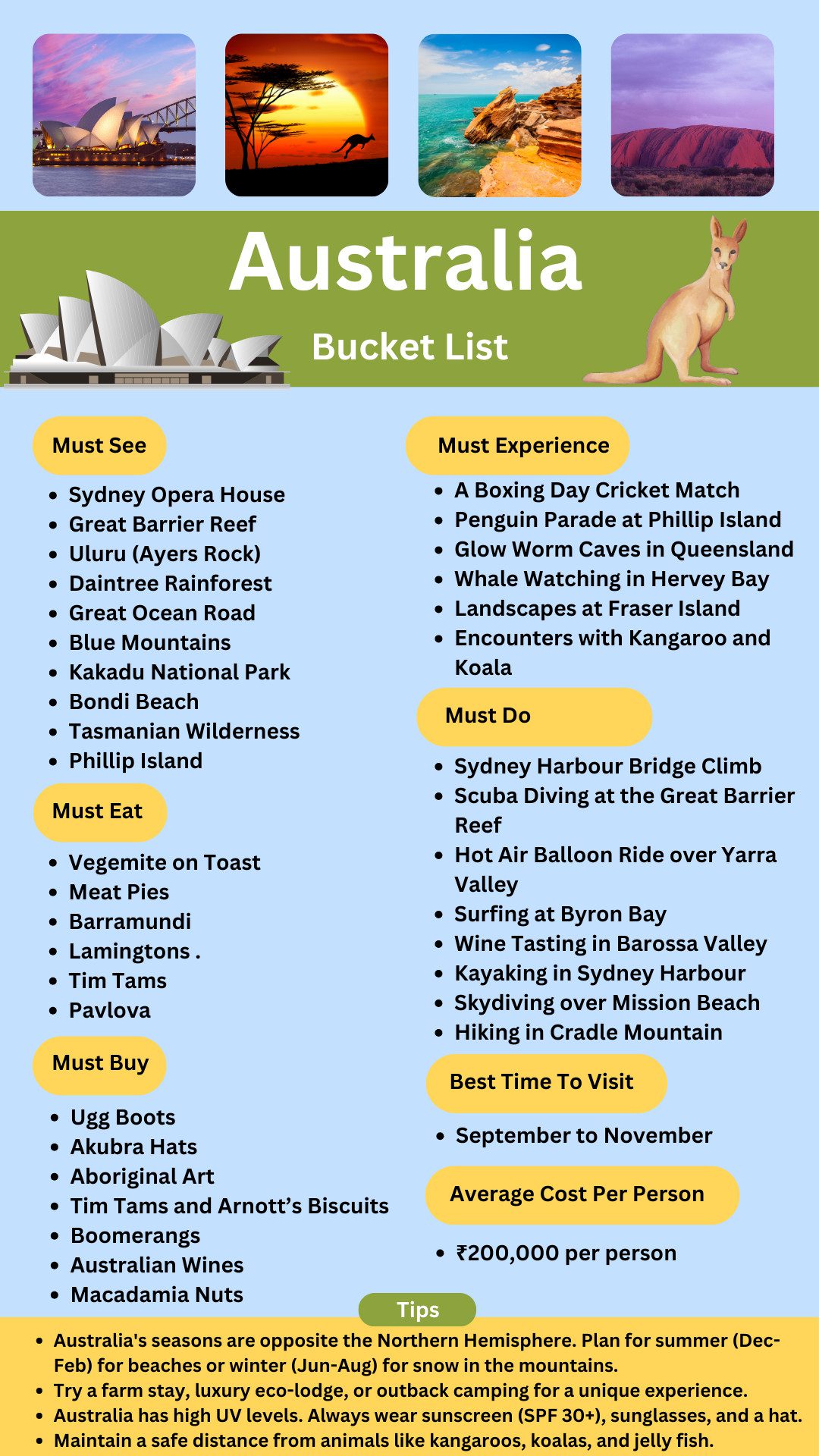
Australia’s most famous sights range from architectural icons to ancient natural formations. Many of these landmarks anchor entire regions of the country.
- The Sydney Opera House is one of the most recognizable buildings in the world. Its sail shaped roof sits right on Sydney Harbour. Catching a performance inside adds a cultural layer to simply admiring it from outside.
- The Great Barrier Reef stretches over 1,400 miles along the northeastern coast. It is the largest coral reef system on earth. Snorkeling or diving here reveals an underwater world unlike anywhere else.
- Uluru, also called Ayers Rock, rises dramatically from the flat central desert. This massive sandstone monolith holds deep spiritual significance for Aboriginal communities. Watching it change color at sunrise or sunset is a bucket list moment for many travelers.
- The Daintree Rainforest is one of the oldest rainforests on the planet. It sits in tropical north Queensland, right where jungle meets reef. Boardwalk trails let visitors explore without disturbing the fragile ecosystem.
- The Great Ocean Road hugs the southern coast of Victoria for about 150 miles. Dramatic limestone formations, including the Twelve Apostles, line the route. It ranks among the world’s most scenic coastal drives.
- The Blue Mountains sit just outside Sydney, offering eucalyptus forests and dramatic cliff views. A blue haze often hangs over the valleys, created by oil released from the trees. It makes for an easy day trip from the city.
- Kakadu National Park in the Northern Territory combines wetlands, waterfalls, and ancient rock art. It holds UNESCO World Heritage status for both natural and cultural significance. Aboriginal guides often lead tours that explain the park’s deep history.
- Bondi Beach is Sydney’s most famous stretch of sand. Surfers, sunbathers, and joggers all share this lively coastal strip. The Bondi to Coogee coastal walk is a popular way to see more of the area.
- The Tasmanian Wilderness covers vast stretches of untouched forest and mountain terrain. Tasmania feels wilder and quieter than mainland Australia. It appeals strongly to hikers and nature photographers.
- Phillip Island, south of Melbourne, is known for its wildlife and coastal scenery. Rugged cliffs and quiet beaches define much of the island. It also hosts one of Australia’s most beloved wildlife experiences.
Insider Tips for Visiting Major Landmarks
- Book Sydney Opera House tickets well in advance, especially for popular performances. A guided architecture tour is a good option if a show does not fit your schedule.
- Choose a reef tour departing from Cairns or Port Douglas for easy Great Barrier Reef access. Morning tours often have calmer water and better visibility.
- Watch Uluru at both sunrise and sunset if your schedule allows. The rock’s color shifts dramatically between the two, and each viewing feels different.
- Drive the Great Ocean Road over two days rather than rushing it in one. This allows time to stop at every major lookout without feeling rushed.
Wildlife Encounters and Nature Experiences
Australia’s wildlife is unlike anything found elsewhere in the world. Several destinations offer close, memorable encounters with native species.
- Encounters with kangaroos and koalas rank high on most visitor wish lists. Wildlife parks and sanctuaries offer safe, guided interactions. Seeing kangaroos in the wild, especially at dusk, adds an extra thrill.
- The Penguin Parade at Phillip Island is one of Australia’s most charming wildlife experiences. Each evening, little penguins waddle ashore after a day of fishing. Viewing platforms let visitors watch respectfully without disturbing the colony.
- Glow worm caves in Queensland create a magical, almost otherworldly experience. Thousands of tiny glow worms light up cave ceilings like a starry sky. Guided tours typically run in small groups to protect the fragile cave ecosystem.
- Whale watching in Hervey Bay draws visitors from around the world each year. Humpback whales pass through these waters during their annual migration. Boat tours here have a strong reputation for close, ethical sightings.
- Landscapes at Fraser Island, now known as K’gari, combine sand dunes, rainforest, and freshwater lakes. It is the largest sand island in the world. Four wheel drive tours are the most common way to explore its remote beaches.
Local Etiquette Around Wildlife
- Maintain a safe distance from animals like kangaroos, koalas, and jellyfish. Wild animals can behave unpredictably, even when they appear calm.
- Never feed wild kangaroos or birds, even when tempted by their friendly appearance. Human food can harm their health and encourage aggressive behavior.
- Follow ranger instructions closely at the Penguin Parade and similar wildlife sites. Flash photography and loud noise can stress the animals.
- Check jellyfish warnings before swimming in northern Australian waters. Stinger season typically runs from November through April in tropical regions.
Thrilling Activities for Adventure Seekers
Australia’s landscape lends itself naturally to adventure travel. From coastlines to mountains, there is no shortage of adrenaline-inducing options.
- The Sydney Harbour Bridge Climb takes visitors up to the top of one of the city’s most famous structures. Guided groups climb ladders and catwalks to reach the summit. The views over the harbour and Opera House make it worth the effort.
- Scuba diving at the Great Barrier Reef ranks among the best diving experiences on the planet. Colorful coral, sea turtles, and reef sharks fill these waters. Certified divers and beginners alike can find suitable tours.
- A hot air balloon ride over Yarra Valley combines adventure with scenery. Vineyards and rolling hills spread out below at sunrise. Many tours end with a champagne breakfast after landing.
- Surfing at Byron Bay attracts both beginners and experienced surfers. The town has a relaxed, bohemian atmosphere that matches its laid back beach culture. Surf schools here cater well to first timers.
- Wine tasting in Barossa Valley showcases some of Australia’s best vineyards. This South Australian region is famous for bold reds, especially Shiraz. Many wineries offer tastings paired with local food.
- Kayaking in Sydney Harbour gives a different perspective on the city’s famous skyline. Paddling past the Opera House at a slower pace feels far more personal than a ferry ride. Early morning sessions tend to have calmer water.
- Skydiving over Mission Beach combines tropical scenery with a serious adrenaline rush. Divers get sweeping views of rainforest, reef, and coastline all at once. It is considered one of the most scenic skydiving locations in the country.
- Hiking in Cradle Mountain takes visitors through some of Tasmania’s most dramatic scenery. The Overland Track is a multi-day option for serious hikers. Shorter day walks around Dove Lake suit casual visitors well.
Planning Tips for Adventure Activities
- Book Sydney Harbour Bridge Climb slots for early morning or twilight for the best light and cooler temperatures. Weekday slots also tend to be less crowded.
- Choose a certified dive operator for Great Barrier Reef trips, especially if diving for the first time. Certification and safety briefings matter more than a lower price.
- Reserve hot air balloon rides in Yarra Valley well ahead of time, since flights depend on weather. Mornings offer the calmest wind conditions.
- Pack reef safe sunscreen and a wetsuit rental if surfing at Byron Bay. Sun exposure adds up quickly during long sessions in the water.
A Food Lover’s Guide to Australian Cuisine
Australian food blends British tradition, immigrant influence, and native ingredients into a distinct culinary identity.
- Vegemite on toast is a true Australian breakfast staple. This dark, salty yeast spread divides opinion among first time tasters. A thin layer on buttered toast is the traditional way to try it.
- Meat pies are a beloved Australian comfort food. Flaky pastry surrounds a filling of minced meat and gravy. They are sold everywhere, from bakeries to sporting event concession stands.
- Barramundi is a popular native fish found on menus across the country. Its mild flavor and firm texture make it a favorite for grilling. Many coastal restaurants serve it fresh, often with native herb seasonings.
- Lamingtons are a classic Australian dessert made of sponge cake coated in chocolate and coconut. They are a staple at bake sales and casual gatherings. Some bakeries add a layer of jam or cream in the middle.
- Tim Tams are Australia’s most famous chocolate biscuit. Many locals enjoy the “Tim Tam Slam,” biting off both corners and using the biscuit as a straw for hot drinks. They make an easy, packable souvenir.
- Pavlova is a meringue based dessert topped with cream and fresh fruit. Both Australia and New Zealand claim its origin. Its crisp shell and soft center make it a popular choice for celebrations.
Common Mistakes First-Timers Make with Food
- Assuming Vegemite works like peanut butter or jam. A thick spread overwhelms the taste, so less is always more with this one.
- Skipping regional specialties in favor of only familiar chain restaurants. Local bakeries and seafood shacks often offer more memorable meals.
- Not trying native ingredients like macadamia nuts or bush herbs when available. These flavors offer a distinctly Australian twist on familiar dishes.
- Forgetting that tipping is not mandatory in most Australian restaurants. Service staff earn a standard wage, so tips are appreciated but optional.
Souvenirs and Shopping Worth Your Suitcase Space
Shopping in Australia offers a mix of practical goods and unique regional products.
- Ugg boots are a globally recognized Australian product. Originally designed for warmth rather than fashion, they have become a popular souvenir. Buying from an authentic Australian brand ensures better quality sheepskin.
- Akubra hats represent classic Australian outback style. These wide brimmed felt hats are built for sun protection and durability. Many visitors pick one up as both a souvenir and a practical travel accessory.
- Aboriginal art reflects some of the oldest continuous artistic traditions in the world. Dot paintings and intricate patterns often carry deep cultural stories. Buying from Aboriginal owned galleries supports artists directly and ensures authenticity.
- Tim Tams and Arnott’s biscuits make easy, lightweight gifts. These snacks are widely available at grocery stores and airports. They travel well and rarely go unappreciated back home.
- Boomerangs are a traditional Aboriginal tool that has become a popular souvenir item. Decorative versions are common, though functional ones exist too. Look for detailed craftsmanship if buying an authentic piece.
- Australian wines, especially from regions like Barossa Valley, make excellent gifts for wine lovers. Many wineries offer shipping options for larger purchases. A bottle bought directly from a vineyard often has a story worth sharing.
- Macadamia nuts are native to Australia and popular as a packaged snack. They have a rich, buttery flavor different from other nut varieties. Chocolate coated versions are widely available as gifts.
Budget Tips for Shopping Smart
- Buy Ugg boots from established Australian brands rather than cheap imitations sold near tourist areas. Genuine sheepskin costs more but lasts much longer.
- Compare prices at a few Aboriginal art galleries before purchasing a larger piece. Authentic works vary in price based on artist reputation and detail.
- Stock up on Tim Tams and biscuits at supermarkets rather than airport shops. Prices at the airport tend to run noticeably higher.
- Look for wine cellar door sales in Barossa Valley instead of retail shops. Buying directly often comes with a small discount or tasting credit.
Once in a Lifetime Cultural Experiences
Some of Australia’s best memories come from cultural moments rather than sightseeing alone. These experiences connect visitors with local traditions and everyday life.
- Attending a Boxing Day cricket match is a quintessential Australian summer tradition. The Melbourne Cricket Ground hosts one of the sport’s biggest annual fixtures. Even non cricket fans often enjoy the festive, crowded atmosphere.
- Trying a farm stay, luxury eco-lodge, or outback camping adds variety to any Australian trip. These options offer a slower, more immersive way to experience the landscape. Outback camping in particular gives travelers a true taste of the country’s vast open spaces.
Hidden Gems Beyond the Usual Tourist Trail
- Look into smaller regional cricket matches if Boxing Day tickets are sold out. Local matches often have a friendly, community atmosphere.
- Consider a farm stay in regional Victoria or New South Wales for a quieter alternative to city hotels. Many properties let guests help with daily farm activities.
- Seek out smaller eco-lodges near Kakadu or Daintree instead of larger resort chains. These properties often blend more seamlessly into the surrounding landscape.
- Try outback camping with a small group tour rather than a large bus operation. Smaller groups usually mean more flexibility and quieter campsites.
When to Go and How Much to Budget
- Australia’s seasons run opposite to the Northern Hemisphere, which affects trip planning significantly.
- The best time to visit for beaches and warm weather runs from December through February. This is Australia’s summer season. Winter, from June through August, suits travelers heading to the mountains for snow.
- Average costs run around 200,000 rupees per person for a full trip, though this varies by travel style. Budget travelers can reduce costs by choosing hostels and self-catering options. Those seeking luxury lodges and private tours should plan for a higher budget.
Seasonal Advice for First-Time Visitors
- Plan beach trips and reef visits for the September to November shoulder season. Weather is pleasant and crowds are smaller than peak summer months.
- Save mountain trips, including Tasmania and the Snowy Mountains, for the winter months. Snow season typically peaks in July and August.
- Book accommodations early if traveling during Australian school holidays. Domestic travel spikes significantly during these periods.
- Pack for both sun and sudden rain regardless of season, since coastal weather can shift quickly.
Practical Tips Every Traveler Should Know
A few practical habits will make your Australia trip smoother from the moment you land.
- Australia has high UV levels, even on cloudy days. Wear sunscreen with at least SPF 30, along with sunglasses and a hat. Sunburn can happen faster here than many visitors expect.
- Maintain a safe distance from animals like kangaroos, koalas, and jellyfish. Wildlife encounters are part of the appeal, but keeping distance protects both visitors and animals.
- Plan your itinerary around Australia’s size, since distances between cities are often much larger than they appear on a map. Domestic flights are usually more practical than long drives between major regions.
Common Mistakes First-Timers Make
- Underestimating travel distances between major attractions. Australia is roughly the size of the continental United States, and road trips take longer than expected.
- Skipping sunscreen reapplication throughout the day. UV levels remain strong even during cooler months in southern regions.
- Ignoring stinger season warnings in tropical waters. Protective swimwear is often recommended during peak jellyfish months.
- Overpacking for one climate while ignoring regional variation. Weather can shift dramatically between the tropical north and temperate south.
Final Thoughts on Planning Your Australia Adventure
Australia rewards travelers willing to explore beyond the major cities. Ancient rock formations, coral reefs, and unique wildlife all sit within reach of iconic landmarks. Few countries offer this much diversity in landscape and experience.
Whether you come for the reef, the outback, or a cold pint after a day at Bondi, Australia leaves a lasting impression. Start planning early, pack for variety, and get ready for one of the most memorable trips of your life.