
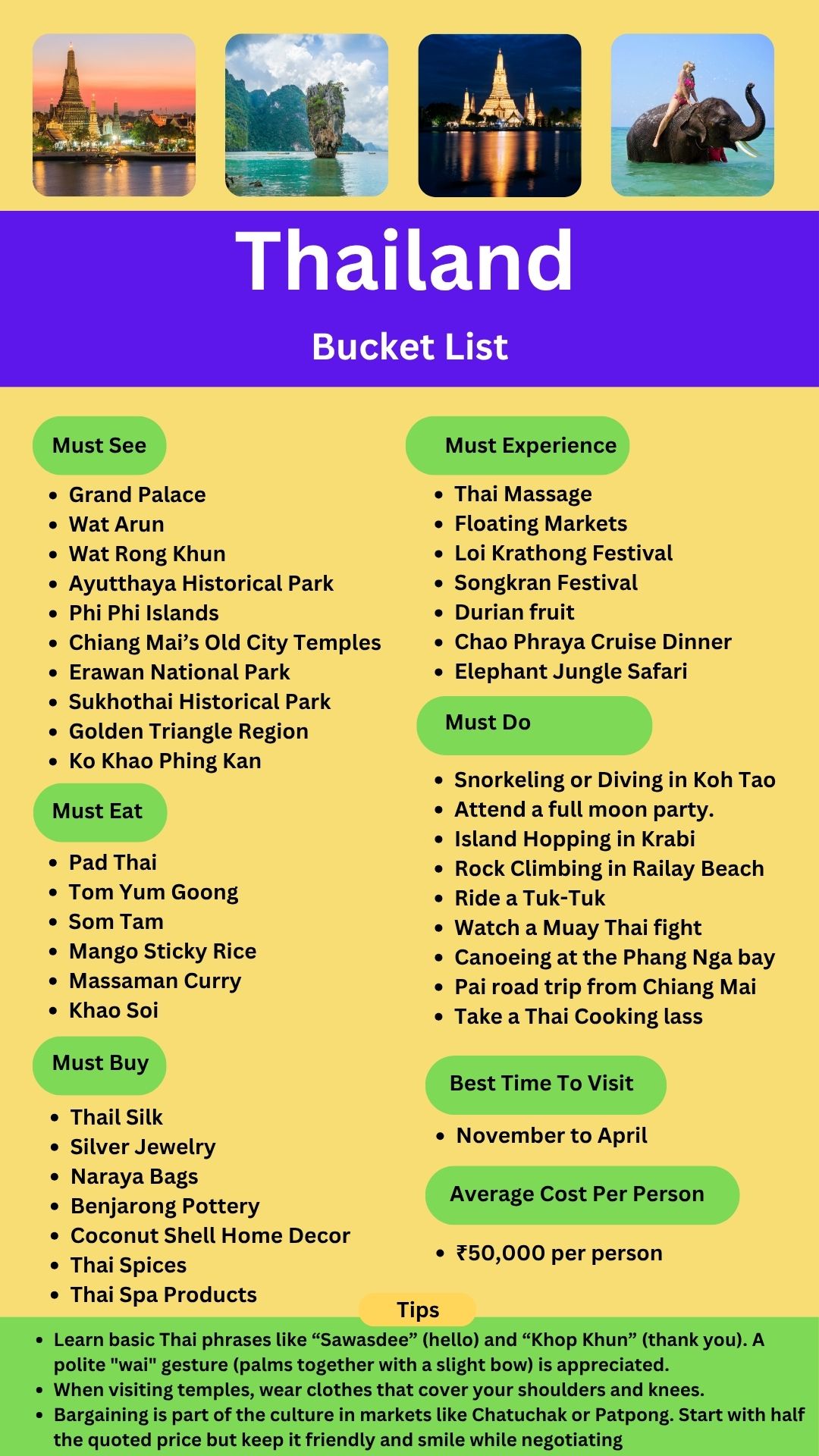
Thailand pulls in millions of travelers every year, and it earns every bit of that attention. Golden temples glow against city skylines. Limestone islands rise from turquoise water. Street food stalls fill the air with lemongrass and chili.
Whether you are planning your first trip or your fifth, Thailand rewards curiosity. This guide walks through the must-see landmarks, the food you cannot skip, and the experiences that turn a vacation into a story you will tell for years. Let’s map out your Thailand adventure.
Bangkok’s Iconic Temples and Landmarks
Bangkok is chaotic, beautiful, and endlessly photogenic. The city’s temples anchor most first-time itineraries, and for good reason.
The Grand Palace once housed Thai kings and remains the country’s most visited landmark. Its gold spires and intricate mosaics show off centuries of royal craftsmanship. Plan at least two hours to explore the grounds properly.
Wat Arun, the Temple of Dawn, sits along the Chao Phraya River. Its porcelain-covered spires catch the light beautifully at sunrise and sunset. Climbing the steep steps rewards you with sweeping river views.
Best Photo Spots
- Shoot Wat Arun from the opposite riverbank in Bangkok Yai around sunset. The temple glows orange and pink, and the water reflects the entire skyline behind it.
- Visit the Grand Palace before 9 a.m. to avoid both crowds and harsh midday light. Early morning shadows make the gold detailing pop in photos.
- Book a river cruise boat with an open deck. You get unobstructed shots of both temples without fighting for space with other tourists.
Thailand’s Ancient Cities and Historical Parks
Beyond Bangkok, Thailand’s history unfolds across former capitals and quirky modern landmarks. These sites tell the story of kingdoms that shaped Southeast Asia.
Ayutthaya Historical Park sits about an hour north of Bangkok. Crumbling temple ruins and tree-wrapped Buddha statues make it one of Thailand’s most atmospheric stops. It earned UNESCO World Heritage status for good reason.
Sukhothai Historical Park often gets overlooked in favor of Ayutthaya, but it deserves equal attention. This was Thailand’s first capital, and its restored temples feel peaceful and less crowded.
Wat Rong Khun, the White Temple in Chiang Rai, is a modern marvel. Artist Chalermchai Kositpipat designed it with intricate white plaster and mirrored glass. It looks otherworldly, especially against a blue sky.
The Golden Triangle region, where Thailand meets Laos and Myanmar, adds a different kind of history. This area was once central to the opium trade and now offers river views and cultural museums.
Planning Tips
- Rent a bicycle at Ayutthaya to cover more ground between temple ruins. The park spreads across a wide area, and walking everywhere eats up your day.
- Visit Sukhothai in the late afternoon when temperatures drop and lighting softens. Fewer tour buses arrive at this hour, so you get quieter photos.
- Combine Wat Rong Khun with a Golden Triangle day trip from Chiang Rai. Both sites sit close enough to visit in a single, well-planned day.
Island and Beach Escapes You Can’t Miss
Thailand’s coastline delivers some of the most striking scenery in Southeast Asia. Limestone cliffs, hidden lagoons, and powder sand beaches draw travelers from around the world.
The Phi Phi Islands remain a bucket list staple. Maya Bay, made famous by film, features dramatic cliffs surrounding shallow turquoise water. Boat tours here get busy, so timing your visit matters.
Ko Khao Phing Kan, better known as James Bond Island, sits in Phang Nga Bay. Its narrow rock spire rising from the sea is instantly recognizable. Kayaking around the surrounding karsts adds an extra layer of adventure.
Hidden Gems
- Skip the crowded Phi Phi day tours and book a sunrise trip instead. Boats leaving before 7 a.m. reach Maya Bay before the bigger tour groups arrive.
- Explore Phang Nga Bay by kayak rather than speedboat. Paddling lets you slip into sea caves and hidden lagoons that larger boats simply cannot reach.
- Ask local operators about lesser-known islands near Krabi, like Koh Poda. They offer similar scenery to Phi Phi with a fraction of the visitors.
Chiang Mai and Northern Thailand Adventures
Northern Thailand moves at a slower pace than Bangkok or the southern islands. Mountains, forests, and hill tribe villages define the region’s character.
Chiang Mai’s Old City is packed with centuries-old temples inside a moated square. Wandering between them on foot feels like stepping back in time. Evening markets add energy once the sun goes down.
Erawan National Park, near Kanchanaburi, features a seven-tiered waterfall with emerald pools. Swimming between the tiers is one of the more refreshing experiences in the country. Fish nibbling at your feet is a bonus, whether you like it or not.
An elephant jungle safari near Chiang Mai lets visitors interact with rescued elephants in ethical sanctuaries. These experiences prioritize the animals’ wellbeing over performance tricks. Feeding and bathing elephants alongside their caretakers is genuinely moving.
Local Etiquette
- Learn a few basic Thai phrases before you go. Saying “Sawasdee” for hello and “Khop Khun” for thank you goes a long way with locals.
- Practice the wai greeting when appropriate. Pressing your palms together with a slight bow shows respect and is always appreciated.
- Choose elephant sanctuaries that ban riding and focus on rehabilitation. This protects the animals and supports more responsible tourism practices.
Cultural Experiences and Festivals
Thai culture reveals itself best through participation, not observation. Festivals, markets, and everyday rituals give visitors a deeper connection to the country.
A traditional Thai massage is worth experiencing at least once. It combines stretching, pressure points, and rhythmic compression. Many visitors find it more intense than relaxing, but wonderfully so.
Floating markets like Damnoen Saduak offer a glimpse of old-school Thai commerce. Vendors paddle wooden boats loaded with fruit, noodles, and souvenirs. Arriving early avoids both heat and crowds.
If your trip lines up with Loi Krathong or Songkran, do not miss them. Loi Krathong involves releasing lantern-lit floats onto rivers each November. Songkran, Thailand’s water festival in April, turns entire cities into massive water fights.
A Chao Phraya dinner cruise rounds out the cultural checklist nicely. Floating past illuminated temples while eating Thai classics feels romantic without trying too hard.
Seasonal Advice
- Time your visit around November for Loi Krathong if lanterns and river festivals appeal to you. Chiang Mai’s version, called Yi Peng, is especially spectacular.
- Pack quick-dry clothing if you will be in Thailand during Songkran in April. You will get soaked, and that is entirely the point.
- Book dinner cruises a few days in advance during peak season. Popular routes along the Chao Phraya fill up quickly between December and February.
A Food Lover’s Guide to Thai Cuisine
Thai food balances sweet, sour, salty, and spicy better than almost any cuisine on earth. Eating your way through the country is half the adventure.
Pad Thai needs no introduction, but the street cart version often beats what you find in restaurants back home. Tom Yum Goong, a sour and spicy shrimp soup, delivers a punch of lemongrass and lime.
Som Tam, spicy green papaya salad, comes from the northeast and packs serious heat. Massaman curry leans milder and richer, blending Indian spices with coconut milk. Khao Soi, a Chiang Mai specialty, layers crispy noodles over a curry broth.
Mango sticky rice closes out most meals as the go-to dessert. Ripe mango paired with coconut-soaked sticky rice is simple and completely addictive.
Durian deserves an honorable mention, even if it divides opinion. The smell alone keeps it banned from many hotels and public transport.
Insider Tips
- Order Som Tam as “mai phet” if you want less spice. Northeastern Thai cooks often assume visitors want full heat unless told otherwise.
- Eat at stalls with long lines of local customers rather than empty ones. High turnover usually means fresher ingredients and better flavor.
- Try durian outdoors, away from enclosed spaces like taxis or hotel rooms. Most establishments have strict no-durian policies for good reason.
Adventure, Nightlife, and Active Pursuits
Thailand offers plenty for travelers who want more than sightseeing. Adrenaline, nightlife, and hands-on cultural activities round out any itinerary.
Koh Tao remains Thailand’s top spot for snorkeling and diving. Its calm waters and reasonably priced certification courses attract beginners and experienced divers alike. Coral reefs here stay in surprisingly good condition.
Krabi rewards active travelers with island hopping and rock climbing. Railay Beach, accessible only by boat, is a world-class climbing destination surrounded by dramatic cliffs. Even non-climbers enjoy the scenery from the beach below.
A tuk-tuk ride through Bangkok traffic is chaotic, loud, and strangely fun. Watching a live Muay Thai fight adds a different kind of intensity, showcasing Thailand’s national sport up close.
For a quieter thrill, canoe through Phang Nga Bay’s sea caves. If you have extra days, drive the winding mountain road from Chiang Mai to Pai. A hands-on Thai cooking class ties the whole trip together nicely.
Common Mistakes
- Do not book a full moon party without checking the calendar first. These events happen monthly on Koh Phangan, and dates shift with the lunar cycle.
- Avoid negotiating a tuk-tuk fare after you get in. Always agree on the price before the ride starts to prevent awkward standoffs later.
- Skip climbing at Railay Beach without proper shoes or a guide if you are new to the sport. Rented gear is available, but quality varies.
Shopping for Authentic Thai Treasures
Thailand’s markets and boutiques make it easy to bring a piece of the trip home. Quality and craftsmanship vary, so knowing what to look for helps.
Thai silk is famous worldwide for its texture and vibrant dyes. Silver jewelry from northern hill tribes offers intricate, handmade designs. Naraya bags, a Bangkok favorite, are practical and instantly recognizable by their signature bows.
Benjarong pottery features colorful, hand-painted porcelain rooted in royal tradition. Coconut shell home decor gives a more rustic, sustainable souvenir option. Thai spices and spa products round out most shopping lists nicely.
Budget Tips
- Compare prices at Chatuchak Market before buying anything at tourist-heavy shopping centers. The same items often cost significantly less just a few stalls away.
- Buy spices and dried goods at local wet markets rather than airport shops. Prices at the airport typically run two to three times higher.
- Check Benjarong pottery pieces for hand-painted detail before buying. Machine-printed versions look similar but sell at a fraction of the value.
Best Time to Visit and Trip Costs
Timing your trip well makes a real difference in Thailand. Weather, crowds, and prices all shift depending on the season.
November through April marks Thailand’s cool and dry season, and it is the most popular time to visit. Temperatures stay comfortable, and rainfall is minimal across most regions. This window also lines up with major festivals like Loi Krathong.
Budgeting for Thailand is refreshingly manageable. Many travelers plan around 50,000 rupees per person for a well-rounded trip covering flights, hotels, food, and activities.
Money-Saving Tips
- Travel just before or after peak season, in early November or late April, for lower prices. Weather stays decent, but hotel rates drop noticeably.
- Mix budget guesthouses with one or two nicer hotel stays. This keeps overall costs down while still allowing a few memorable splurges.
- Use overnight trains between major cities instead of domestic flights. You save on accommodation for that night while covering long distances comfortably.
Practical Travel Tips for First-Timers
A few small habits make travel in Thailand smoother. Most of this comes down to respect and preparation.
When visiting temples, always cover your shoulders and knees. Many temples turn away visitors in shorts or sleeveless tops, so pack accordingly.
Bargaining is expected at markets like Chatuchak and Patpong. Start around half the quoted price and negotiate from there. Keep the exchange friendly, and a smile usually gets you a better deal than a hard bargain.
Final Thoughts
Thailand rewards travelers who slow down and explore beyond the highlight reel. Temples, islands, food stalls, and mountain roads each offer something different. Every region adds its own texture to the trip.
Start planning early, pack light, and leave room for spontaneity. Thailand has a way of surprising even the most prepared travelers. Your bucket list is ready. Now it’s time to book the flight.