
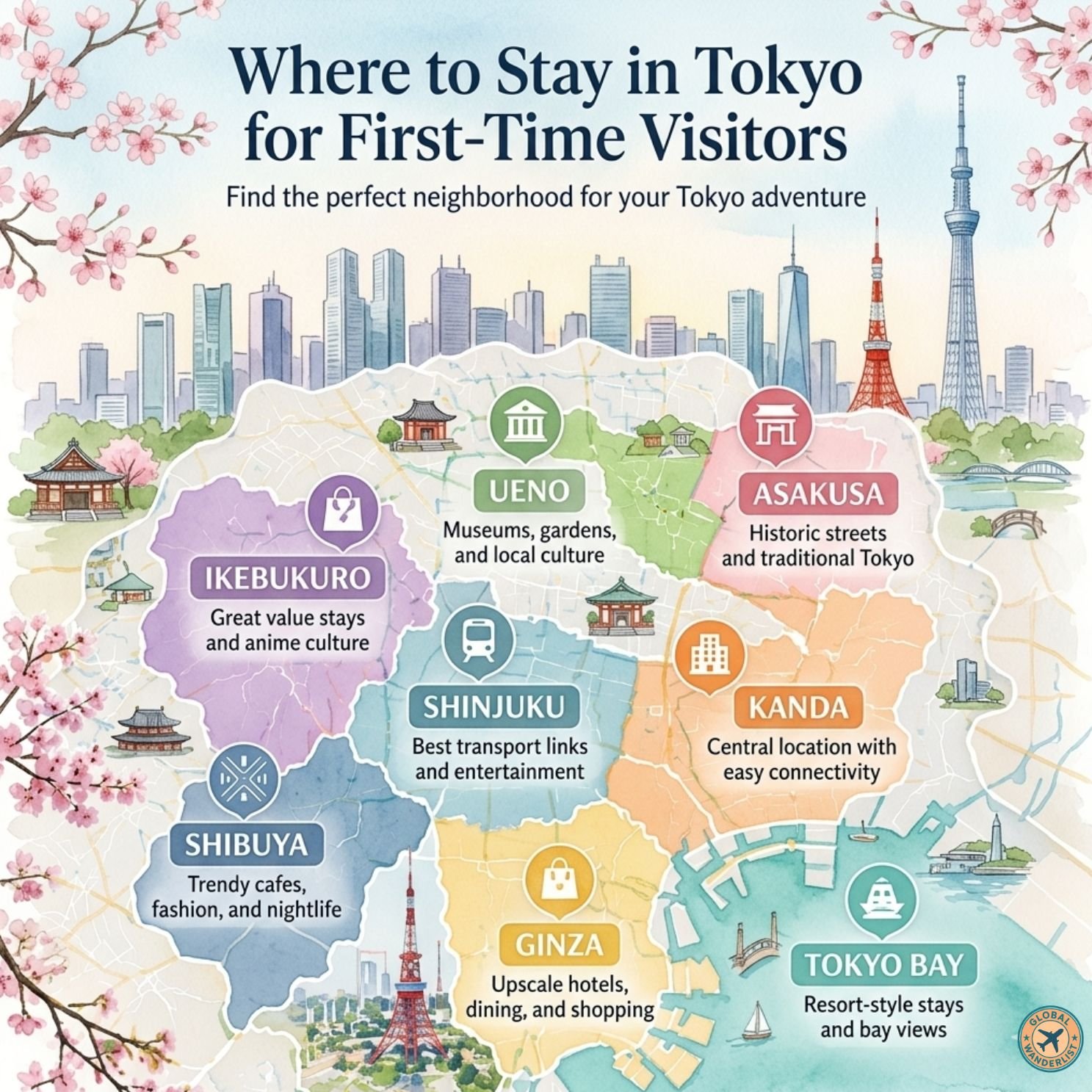
Tokyo splits into distinct neighborhoods, each with its own personality and reasons to book a hotel there. Picking the right base shapes your whole trip, from how easily you reach attractions to what your mornings feel like stepping outside. Unlike many cities, Tokyo doesn’t have one obvious tourist hub. Instead, seven or eight areas each do something different well.
This guide breaks down seven neighborhoods worth considering, based on what each one actually offers. It also covers practical details like transit access, nearby attractions, and roughly what kind of traveler suits each area best.
Ikebukuro
Ikebukuro sits in northwest Tokyo, known for great value stays and a strong anime culture scene. Hotels here tend to cost less than central options while still connecting easily to the rest of the city. The station itself ranks among the busiest in the world, though it feels far less overwhelming than Shinjuku once you’re outside.
Sunshine City, a large complex with an aquarium and observation deck, sits within walking distance of most hotels here. This area of Japan draws a strong mix of students and younger locals, giving it a more relaxed, everyday feel compared to Tokyo’s flashier districts.
Why Stay Here
- Lower hotel prices: Rooms here often cost noticeably less than similar options in Shibuya or Ginza.
- Anime and gaming shops: This district rivals Akihabara for anime culture, with fewer tourist crowds.
- Strong transit links: The Yamanote Line connects Ikebukuro directly to Shinjuku, Shibuya, and Tokyo Station.
- Sunshine City complex: This mall holds an aquarium, planetarium, and observation deck, all under one roof.
Who It Suits
Budget-conscious travelers and anime fans find real value here, without sacrificing much on transit access. Solo travelers on longer trips also appreciate the lower nightly rates, which stretch a budget further over a week or two.
Ueno
Ueno holds museums, gardens, and a strong sense of local Tokyo life. The area feels less flashy than Shibuya or Ginza, but makes up for it with easy access to culture. Ueno Park alone could fill a full day, home to the Tokyo National Museum, a zoo, and several smaller galleries.
The neighborhood also sits close to Asakusa, making it a practical base for travelers who want both museum access and a short trip to Sensoji Temple without switching hotels partway through their stay.
Why Stay Here
- Museum access: Several major museums sit within walking distance of Ueno Park.
- Local market streets: Ameyoko Market runs nearby, packed with food stalls and shops.
- Easy Narita Express connection: The Keisei Skyliner train links Ueno directly to Narita Airport.
- Proximity to Asakusa: A short train or walk brings you to Sensoji Temple and the old town district.
Who It Suits
Travelers focused on museums and a quieter pace tend to enjoy basing themselves here. Families traveling with older kids also do well in Ueno, given the park space and manageable crowd levels compared to central Tokyo.
Asakusa
Asakusa keeps Tokyo’s older character alive, with narrow streets and traditional buildings surrounding Sensoji Temple. Staying here feels closer to old Tokyo than almost anywhere else in the city. Rickshaw drivers still work the streets near the temple, and small shops sell traditional crafts alongside modern souvenirs.
Hotels in this district range from budget guesthouses to a handful of higher-end ryokan-style stays, giving visitors a chance to sleep in a more traditional Japanese room without leaving the city.
Why Stay Here
- Historic streets: Traditional shopfronts and temples fill the neighborhood.
- Riverside views: The Sumida River runs nearby, with Skytree views from several spots.
- Traditional accommodation options: A few ryokan-style inns here offer tatami rooms and futon bedding.
- Early morning temple visits: Staying nearby means you can reach Sensoji before the crowds arrive.
Who It Suits
First-time visitors wanting a traditional atmosphere often pick Asakusa for their stay. Photographers also favor this neighborhood, since the mix of temples, river views, and old streets offers more visual variety than the glass towers found elsewhere in the city.
Shinjuku
Shinjuku offers the best transport links in the city, along with strong nightlife and entertainment options. Nearly every train and subway line passes through its massive station, which handles more daily passengers than any other station on Earth. That scale can feel intimidating at first, but it also means you’re never far from wherever you need to go next.
The district splits into distinct sections, from the neon chaos of Kabukicho to the calmer, business-focused west side near the Tokyo Metropolitan Government Building. Shinjuku Gyoen, one of the city’s best parks, sits just a short walk from the busier station area.
Why Stay Here
- Transit connections: Shinjuku Station connects to nearly every part of Tokyo directly.
- Nightlife variety: Bars, restaurants, and entertainment run late into the night here.
- Free observation deck: The Tokyo Metropolitan Government Building offers city views at no cost.
- Golden Gai bars: This tiny alley packs dozens of small, atmospheric bars into a few narrow lanes.
Who It Suits
Travelers who want to move around Tokyo easily, day or night, do well basing themselves in Shinjuku. It also suits anyone flying in or out through Haneda or Narita, given how easily the station links to airport express trains.
Kanda
Kanda sits centrally, offering easy connectivity without the intensity of Shibuya or Shinjuku. It works well as a practical base rather than a destination itself. The neighborhood carries a more local, workday feel, filled with small offices, old bookshops, and simple lunch spots rather than tourist attractions.
Tokyo Station sits close enough to walk to from many Kanda hotels, making it a smart choice for anyone planning day trips outside the city by Shinkansen.
Why Stay Here
- Central location: Kanda sits close to Tokyo Station and several major business districts.
- Quieter streets: The area feels calmer than the busier entertainment hubs nearby.
- Easy Shinkansen access: Tokyo Station’s bullet train platforms sit within easy reach for day trips.
- Jimbocho bookshops: This nearby district holds one of the world’s largest concentrations of secondhand bookstores.
Who It Suits
Business travelers and those prioritizing convenience over nightlife often choose Kanda. It also works well for travelers planning multiple day trips to places like Kamakura or Nikko, given the fast rail access.
Ginza
Ginza represents Tokyo’s upscale side, filled with high-end shopping, fine dining, and polished hotels. Staying here puts you in one of the most refined parts of the city. Flagship stores from major fashion houses line the main streets, and department stores like Mitsukoshi anchor entire blocks.
On weekends, the main strip closes to traffic and turns into a pedestrian-only walking street, giving the whole area a relaxed, open feel that’s rare in central Tokyo.
Why Stay Here
- Luxury shopping: Flagship stores and department shops line Ginza’s main streets.
- Fine dining options: Some of Tokyo’s most respected restaurants sit within this district.
- Weekend pedestrian streets: Main roads close to cars on weekend afternoons, opening the area up for walking.
- Proximity to Tsukiji Outer Market: A short walk brings you to some of the city’s best fresh seafood stalls.
Who It Suits
Travelers looking for a more polished, upscale stay tend to gravitate toward Ginza. It also suits couples celebrating a special trip, given the concentration of high-end restaurants and hotels within easy walking distance of each other.
Shibuya
Shibuya brings trendy cafes, fashion, and nightlife together in one of Tokyo’s most energetic districts. The famous crossing sits right at its center, with hundreds of people flowing across at once during peak hours. Beyond the crossing itself, the surrounding streets hold some of the city’s best boutique shopping and cafe culture.
Younger locals treat Shibuya as a natural gathering point, and that energy carries through into the evening, when bars and small clubs fill up across the district.
Why Stay Here
- Fashion and shopping: Trendy boutiques and department stores fill the streets around the station.
- Nightlife energy: Bars and clubs keep this area lively well into the night.
- Shibuya Sky observation deck: This rooftop deck offers open-air views over the crossing and surrounding city.
- Easy access to Harajuku: A short walk connects Shibuya to Harajuku’s fashion streets and Meiji Shrine.
Who It Suits
Younger travelers and anyone chasing Tokyo’s trendiest side often pick Shibuya first. It also suits travelers who want to be within walking distance of both Harajuku’s shopping streets and Yoyogi Park’s green space.
Tokyo Bay
Tokyo Bay offers a different kind of stay entirely, with resort-style hotels and water views instead of dense city streets. Odaiba sits within this area, adding a mix of shopping malls, museums, and unusual architecture built along the water. Rooms here tend to run larger than what you’d find in central Tokyo, since the area developed more recently with hotel space in mind.
This part of the city also works well for anyone attending events at Tokyo Big Sight, since several convention-focused hotels sit within a short train ride of the venue.
Why Stay Here
- Resort-style hotels: Rooms here often come larger and quieter than central options.
- Waterfront views: Bay and bridge views set this area apart from the rest of Tokyo.
- Family-friendly attractions: Odaiba holds teamLab Planets, a Statue of Liberty replica, and several shopping malls.
- Newer hotel stock: Many properties here were built more recently, often with more modern amenities.
Who It Suits
Families and travelers wanting more space and a slower pace often choose Tokyo Bay. It also suits business travelers attending conventions, given the direct rail link to Tokyo Big Sight and the surrounding exhibition venues.
Comparing Your Options
Each neighborhood trades something for something else. Central areas like Shinjuku and Kanda offer convenience but less character. Asakusa and Ueno lean into atmosphere and culture, sometimes at the cost of nightlife. Shibuya and Ginza sit at opposite ends of Tokyo’s personality, one loud and trendy, the other polished and refined.
Thinking through what matters most for your specific trip usually narrows the choice down fast. A short business trip calls for different priorities than a two-week family holiday, and Tokyo has a neighborhood built around nearly every travel style.
Choosing Based on Trip Length
- Pick Shinjuku or Kanda for short trips, since both connect easily to everywhere else.
- Choose Asakusa for a longer stay if atmosphere matters more than late-night options.
- Split your stay between two neighborhoods if your trip runs longer than five days.
- Base yourself near Tokyo Station if you plan several day trips outside the city.
Choosing Based on Budget
- Book Ikebukuro for the best value without sacrificing transit access.
- Save Ginza for a splurge night rather than your entire stay, given its higher price point.
- Compare Ueno and Kanda for a solid middle ground between cost and location.
- Check Tokyo Bay hotels for family rooms, since they often work out cheaper per person than central options.
Choosing Based on Travel Style
- Pick Shibuya or Ginza if nightlife and shopping matter more than quiet mornings.
- Choose Asakusa or Ueno if temples, museums, and a slower pace suit your trip better.
- Consider Tokyo Bay if traveling with kids, given the space and nearby family attractions.
- Base yourself in Shinjuku if you plan day trips beyond Tokyo, thanks to its wide rail connections.
Practical Tips for Booking Your Stay
A few smaller details make a real difference once you’ve picked a neighborhood, particularly around timing and station access.
Booking Tips
- Book several months ahead during cherry blossom season, since hotel prices climb sharply in late March and early April.
- Check how far your hotel sits from the actual station exit, since some buildings list a nearby station despite a longer walk.
- Look for hotels advertising luggage storage, since Tokyo hotel rooms often run smaller than travelers expect.
- Confirm check-in times carefully, since many Tokyo hotels enforce stricter check-in windows than hotels elsewhere.
Final Thoughts
Tokyo doesn’t have one obvious place to stay, and that’s part of what makes the city work so well for different kinds of travelers. Match your neighborhood to what you actually want out of the trip, whether that’s nightlife, tradition, convenience, or quiet. Any of these seven areas puts you within easy reach of the rest of the city, so there’s no real wrong choice, only tradeoffs worth thinking through before you book.