
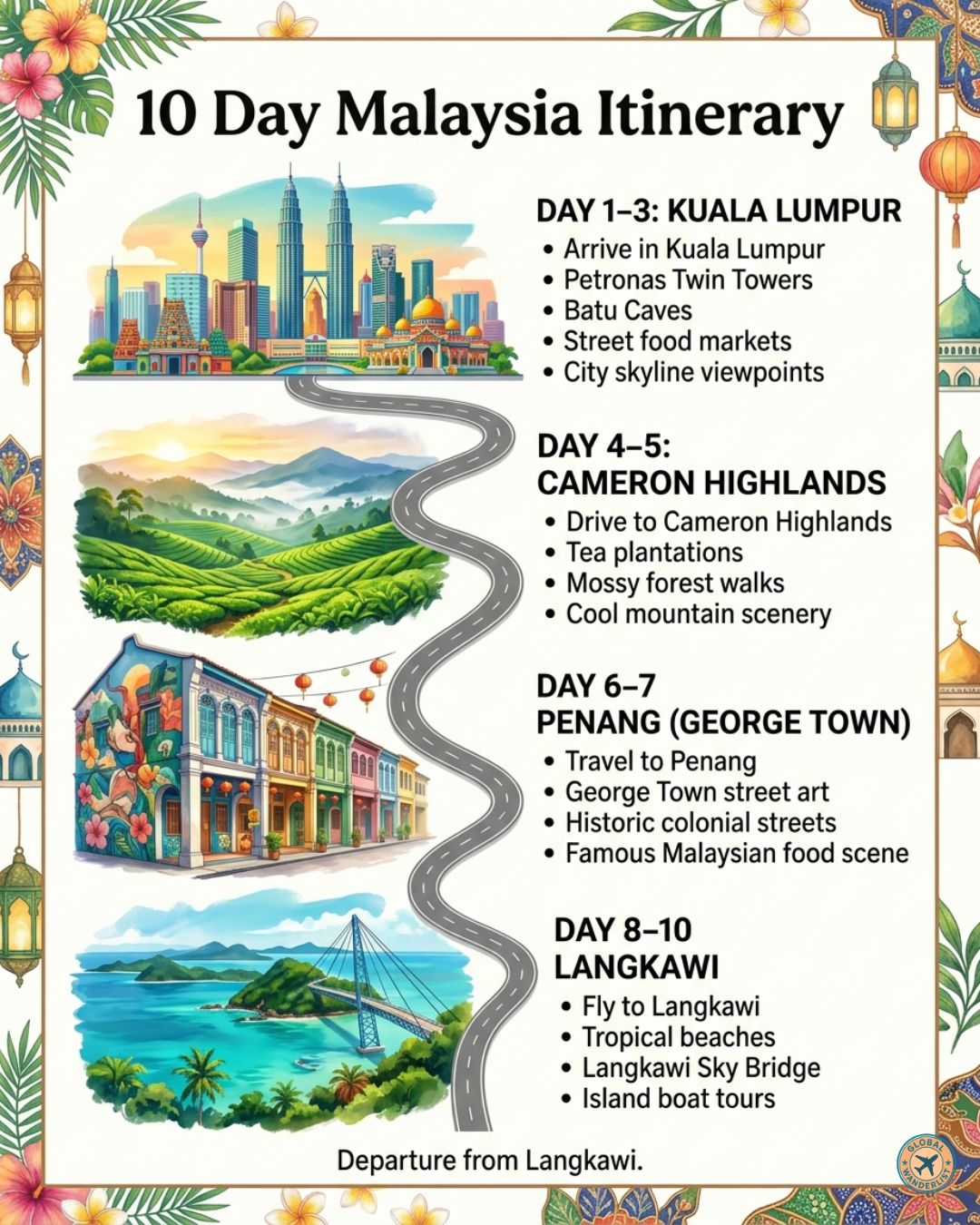
Ten days is enough to properly experience Malaysia’s range, moving from a modern capital city through misty tea plantations, a UNESCO-listed food town, and finally tropical islands. This itinerary covers Kuala Lumpur, Cameron Highlands, Penang, and Langkawi, ending with a well-earned few days on the beach.
Malaysia rewards a slower pace, and this route builds in enough time at each stop to avoid feeling rushed. Below is a full breakdown of the ten days, including where to eat and practical tips for getting the most out of each region.
Trip Overview
| Days | Focus | Best For |
|---|---|---|
| Day 1-3 | Kuala Lumpur | City sights, skyline views, street food |
| Day 4-5 | Cameron Highlands | Tea plantations, cool mountain air |
| Day 6-7 | Penang (George Town) | Street art, colonial history, food |
| Day 8-10 | Langkawi | Beaches, island tours, departure |
Most travelers drive between Kuala Lumpur, Cameron Highlands, and Penang, then fly the final leg to Langkawi. Domestic flights within Malaysia stay short and affordable, and buses run frequently for anyone skipping the rental car.
Day 1-3: Kuala Lumpur
The trip opens in Kuala Lumpur, where three days gives you room to properly explore the capital without rushing between sights. Petronas Twin Towers and Batu Caves form the base for the sightseeing, while street food markets fill the evenings with something new to try. A skyline viewpoint on the final day ties the whole visit together nicely.
Kuala Lumpur can overwhelm first-time visitors with its heat, traffic, and sheer size. Splitting three days into landmark mornings and neighborhood-focused afternoons keeps the pace manageable rather than exhausting.
Where to Eat in Kuala Lumpur
- Village Park Restaurant draws long lines for its nasi lemak, coconut rice served with sambal and crispy fried chicken.
- Jalan Alor turns into an open-air food street every night, with vendors grilling seafood and stir-frying noodles right in front of you.
- Madam Kwan’s has built a reputation across the country for consistently excellent versions of Malaysian classics like char kway teow.
Insider Tips for Kuala Lumpur
- Visit the Petronas Towers early morning to snag skybridge tickets, since same-day passes sell out fast.
- Climb Batu Caves before 9am, when the heat stays manageable and the steps aren’t packed.
- Ride the KL Monorail for cheap, elevated views of downtown rather than sitting in traffic.
- Book a night walk through KLCC Park to catch the towers lit up after sunset.
- Grab handles both taxis and food delivery reliably, and it’s usually cheaper than a metered cab.
Day 4-5: Cameron Highlands
From Kuala Lumpur, the road climbs into Cameron Highlands, a dramatic shift from tropical heat to cool mountain air. Rolling tea plantations blanket the hillsides, and short walks through mossy forest reveal a side of Malaysia most visitors never see. Two days here works as a genuine reset before the busier stops ahead.
The drive itself takes around three to four hours, winding through jungle roads that climb steadily higher. Many travelers underestimate how cold the evenings get here, so packing a light jacket matters more than it sounds.
Where to Eat in Cameron Highlands
- Tea houses scattered across the plantations serve fresh Cameron tea alongside scones, a small nod to the region’s colonial past.
- Local strawberry farms sell fresh produce and simple meals, a nice break from heavier Malaysian dishes.
- Restaurants in Tanah Rata, the main town, serve steamboat dinners well suited to the cooler evening air.
Insider Tips for Cameron Highlands
- Pack a light jacket, since temperatures here drop noticeably compared to the lowlands.
- Visit a tea plantation early morning, when mist still clings to the hillsides and photos come out best.
- Book a mossy forest walk through a licensed guide rather than exploring alone, since trails aren’t always clearly marked.
- Buy strawberry jam or fresh produce directly from roadside farms rather than tourist shops in town.
- Leave Kuala Lumpur early if driving, since the mountain roads slow travel time considerably.
Day 6-7: Penang (George Town)
Two more days bring you to Penang, home to George Town’s UNESCO-listed old streets and one of Southeast Asia’s best food scenes. Street art scattered throughout the historic core turns a simple walk into a scavenger hunt, while colonial buildings hint at the island’s layered past. Food here deserves as much attention as the sightseeing itself.
George Town rewards wandering without a fixed plan. Many of its best murals and shopfronts sit down side streets that don’t show up on standard tourist maps.
Where to Eat in Penang
- Char kway teow stalls throughout George Town serve up what many consider the definitive version of this Malaysian classic.
- Line Clear Nasi Kandar, open late into the night, mixes rice with a rotating spread of curries and side dishes.
- Hawker stalls at Gurney Drive offer a wide spread of Penang specialties in one convenient food court setting.
Insider Tips for Penang
- Rent a bicycle to cover George Town’s street art trail faster than walking the whole route on foot.
- Visit Cheong Fatt Tze Mansion for a guided tour through one of the island’s best-preserved colonial buildings.
- Eat dinner later in the evening, since many of Penang’s best hawker stalls only open after dark.
- Wander beyond the main tourist streets, since some of the best murals hide down quieter alleys.
- Book accommodation inside George Town’s heritage zone for easy walking access to everything worth seeing.
Day 8-10: Langkawi
The final stretch shifts entirely to Langkawi, an archipelago of tropical beaches reached by a short domestic flight from Penang. Three days here allows time for the Langkawi Sky Bridge, boat tours around neighboring islands, and plenty of unstructured beach time before departure. It’s a fitting, relaxed close to a trip that’s covered a lot of ground.
Langkawi moves at a noticeably slower pace than the earlier stops. Most visitors spend these final days doing very little on purpose, which fits the mood after two cities and a mountain stop.
Where to Eat in Langkawi
- Beachfront restaurants along Pantai Cenang serve fresh seafood with sunset views that are hard to beat.
- The Yellow Cafe, tucked just off the main beach strip, mixes Malaysian dishes with a relaxed, laid-back setting.
- Night markets rotate through different parts of the island, offering cheap, authentic local food away from resort menus.
Insider Tips for Langkawi
- Ride the cable car up to the Sky Bridge early in the day, before clouds roll in and obscure the view.
- Book an island-hopping boat tour on your second day, once you’ve settled into the island’s slower rhythm.
- Rent a scooter to explore beyond the main beach strip, since Langkawi’s roads stay quiet and easy to navigate.
- Confirm your departure flight timing carefully, since Langkawi’s airport sits a fair distance from most beach accommodation.
- Duty-free shopping is a genuine perk here, so leave some space in your bag before flying home.
Getting Around This Itinerary
This route mixes driving, buses, and one short domestic flight, and each leg has its own logistics worth planning ahead.
Transport Between Stops
- Rent a car for the Kuala Lumpur to Cameron Highlands leg, giving you flexibility to stop at roadside viewpoints.
- Take a bus or private transfer from Cameron Highlands to Penang if you’d rather skip the return drive.
- Fly from Penang to Langkawi rather than taking the ferry, since the flight saves considerable time.
- Book your Langkawi flight a few weeks ahead during peak season, since seats fill quickly around holidays.
Visa and Entry Basics
- Check current visa requirements for your nationality before booking, since Malaysia’s entry rules shift periodically.
- Carry a printed or digital copy of your accommodation bookings, since immigration sometimes asks for proof of onward travel.
- Keep your passport handy throughout the trip, particularly when checking into smaller guesthouses in Cameron Highlands or Langkawi.
Budgeting for This Trip
Malaysia remains one of the more affordable Southeast Asian countries to visit, though costs shift depending on your travel style.
Estimated Daily Costs
- Budget travelers can expect to spend roughly $30 to $50 USD a day, covering hostels, street food, and local transport.
- Mid-range travelers should plan for $70 to $110 USD daily, factoring in hotels, restaurant meals, and the occasional private transfer.
- Domestic flights between Penang and Langkawi typically run $30 to $60 USD when booked in advance.
Ways to Save
- Eat at hawker stalls and street food markets rather than sit-down restaurants to cut daily food costs significantly.
- Book your Langkawi flight early, since prices climb sharply the closer you get to departure.
- Use Grab for local transport instead of negotiating with drivers, since pricing stays more transparent.
What to Pack for This Route
Since this itinerary swings between tropical heat, mountain chill, and island humidity, packing smart makes a real difference.
Packing Essentials
- Bring lightweight, breathable clothing for Kuala Lumpur, Penang, and Langkawi, given the consistent heat and humidity.
- Pack a light jacket or long-sleeved layer specifically for Cameron Highlands, where evenings turn genuinely cool.
- Carry reef-safe sunscreen for the Langkawi leg, both for your skin and the surrounding marine environment.
- Bring comfortable walking shoes for George Town’s street art trail and Cameron Highlands’ forest walks.
General Travel Tips
- Learn a few basic Malay phrases like “Terima kasih” for thank you, since locals appreciate the small effort.
- Carry small cash for hawker stalls and night markets, since many vendors don’t accept cards.
- Stay hydrated throughout the trip, particularly during the hotter, more humid stretches in Kuala Lumpur and Langkawi.
Final Thoughts
Ten days across Kuala Lumpur, Cameron Highlands, Penang, and Langkawi covers an impressive range of what Malaysia offers, from skyscrapers to tea country to island beaches. Planning your transport between regions ahead of time keeps the trip smooth, leaving more energy for the experiences that actually make it memorable. Pack for both heat and mountain chill, budget realistically, and let the shift from city to hills to islands set the rhythm of your trip.