
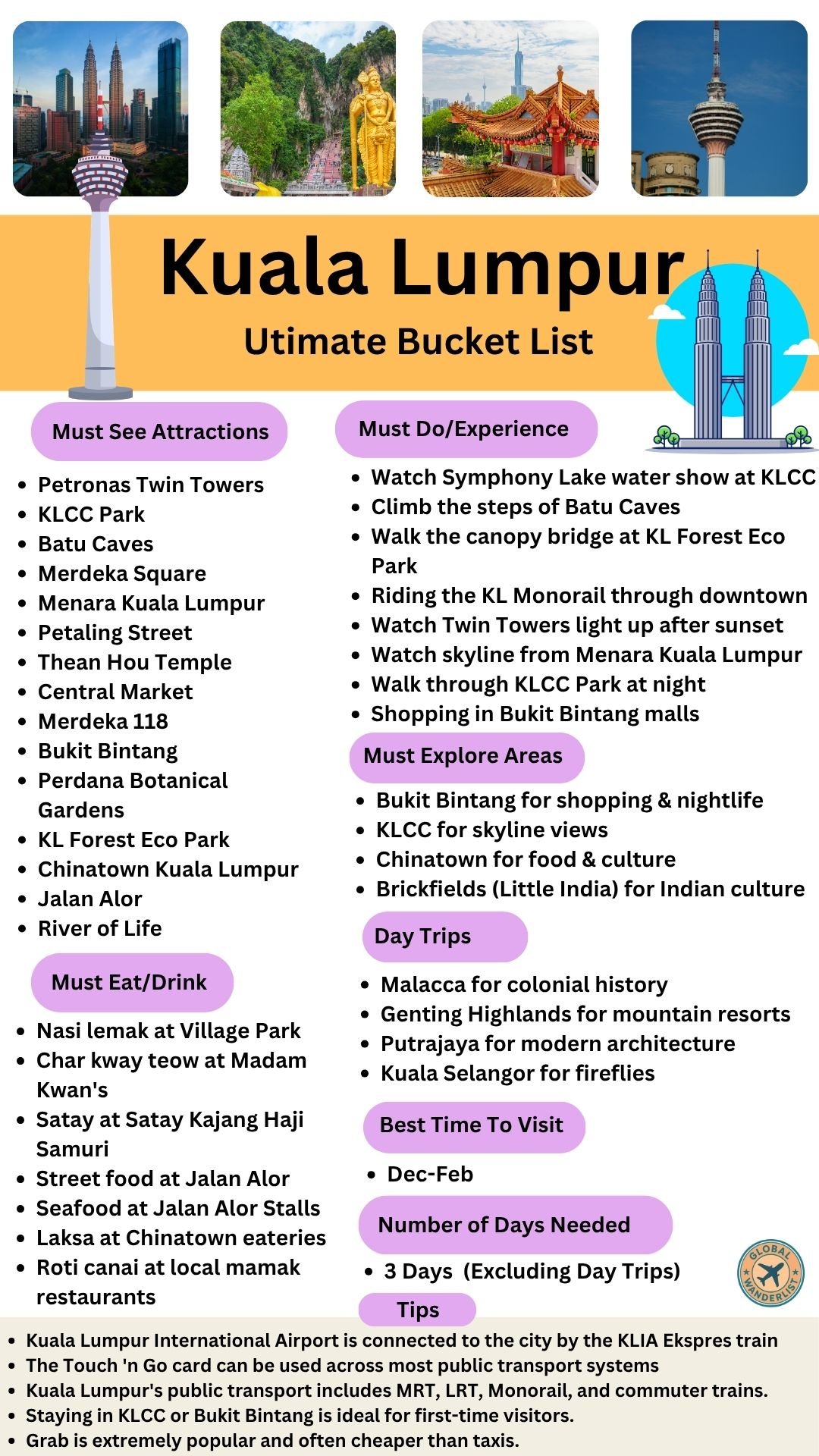
Kuala Lumpur has grown into one of Southeast Asia’s most dynamic capital cities, blending soaring modern architecture with centuries-old temples and some of the region’s best street food. This guide breaks down everything worth prioritizing on a Kuala Lumpur trip, organized the way most visitors actually plan their days.
What to See in Kuala Lumpur?
- Petronas Twin Towers: Once the tallest buildings in the world, they still dominate the skyline. A skybridge connects the two towers partway up.
- KLCC Park: Sits right at the base of the towers, offering a lake, jogging paths, and a playground. The towers loom over the whole space.
- Batu Caves: One of Malaysia’s most important Hindu pilgrimage sites. A towering golden Murugan statue marks the steep staircase leading into the limestone caves.
- Merdeka Square: Malaysia declared independence here in 1957. Moorish-style colonial buildings, including the Sultan Abdul Samad Building, surround the square.
- Menara Kuala Lumpur: Panoramic city views rival those from the Petronas Towers. Queues here are usually much shorter.
- Petaling Street: The heart of KL’s Chinatown. Covered market stalls sell everything from clothing to street snacks.
- Thean Hou Temple: One of the largest Chinese temples in Southeast Asia. It sits on a hilltop with sweeping views and colorful architecture.
- Central Market: A more curated shopping experience focused on local arts and crafts. The building itself is a distinctive art deco landmark.
- Merdeka 118: Now among the tallest buildings in the world. It has reshaped the KL skyline since opening.
- Bukit Bintang: The city’s main shopping and entertainment district. Malls, bars, and street life keep it busy day and night.
- Perdana Botanical Gardens: A quieter, greener escape from the city. An orchid garden and deer park sit inside.
- KL Forest Eco Park: A rare patch of primary rainforest inside a capital city. A canopy walkway crosses right through it.
- Chinatown Kuala Lumpur: An essential food and culture stop. Temples, markets, and affordable eats fill its streets.
- Jalan Alor: Turns into an open-air food street every evening. Vendors grill and stir-fry dishes right in front of diners.
- River of Life: Transformed a neglected riverfront into an illuminated walking corridor. It now runs straight through the historic core.
Must Eat/Drink in Kuala Lumpur
- Nasi lemak at Village Park: Coconut rice pairs with sambal, fried chicken, and crispy anchovies. Locals line up daily for this version.
- Char kway teow at Madam Kwan’s: Stir-fried flat rice noodles come with prawns, egg, and bean sprouts. This Malaysian institution nails the local classics.
- Satay at Satay Kajang Haji Samuri: Char-grilled meat skewers arrive with peanut sauce. The dish originated nearby in Kajang, making the detour worthwhile.
- Street food at Jalan Alor: Vendors fill this street every evening with grilled seafood and stir-fried noodles. Malaysian, Chinese, and Thai dishes sit side by side.
- Seafood at Jalan Alor Stalls: Prawns, stingray, and fish get grilled to order. It ranks among the best ways to spend a KL evening.
- Laksa at Chinatown eateries: The broth varies by region, sometimes coconut-based, sometimes sour and tamarind-forward. Chinatown serves some of the best versions around.
- Roti canai at local mamak restaurants: Flaky flatbread comes served with dhal or curry. Mamak restaurants, open 24 hours, are the place to find it.
What to Experience in Kuala Lumpur?
- Symphony Lake water show at KLCC: Fountains, lights, and music combine for free every night. The Petronas Towers form the backdrop.
- Climbing the steps of Batu Caves: A rite of passage for most visitors. 272 brightly painted steps lead up, often shared with resident monkeys.
- The canopy bridge at KL Forest Eco Park: Offers an unusual view of the city. It hangs above the rainforest floor near downtown skyscrapers.
- Riding the KL Monorail through downtown: Practical as much as scenic. It threads through the city’s busiest districts with elevated views.
- Watching the Twin Towers light up after sunset: A nightly ritual for locals and visitors alike. KLCC Park fills up as the lights switch on.
- Watching the skyline from Menara Kuala Lumpur: Offers a different angle on the same city view. The tower itself becomes part of the photo from certain spots.
- Walking through KLCC Park at night: The day’s heat fades and fountains light up. It’s one of the more pleasant times to be outside.
- Shopping in Bukit Bintang’s malls: Ranges from high-end retailers to the more affordable Sungei Wang Plaza. There’s something here for every budget.
Must Explore Areas
- Bukit Bintang for shopping & nightlife: Malls, street food, and bars keep this neighborhood busy well past midnight.
- KLCC for skyline views: Home to the Petronas Towers and upscale shopping at Suria KLCC. The park adds polish to the whole area.
- Chinatown for food & culture: Petaling Street’s market chaos meets nearby temples and affordable, authentic meals.
- Brickfields (Little India) for Indian culture: Spices, sari shops, and South Indian restaurants fill this sensory-rich neighborhood.
Day Trips
- Malacca for colonial history: This UNESCO city sits about two hours south of KL. Dutch, Portuguese, and British influences show up throughout its old town.
- Genting Highlands for mountain resorts: A cooler escape with resort casinos, theme parks, and a cable car offering jungle views.
- Putrajaya for modern architecture: Malaysia’s purpose-built capital shows off striking Islamic architecture and a massive pink-domed mosque.
- Kuala Selangor for fireflies: About an hour from KL, river cruises here reveal thousands of fireflies lighting up mangrove trees after dark.
Best Time to Visit
December through February offers the driest stretch within Malaysia’s otherwise humid, tropical climate. Temperatures stay warm year-round regardless of season, so this window is really about rainfall rather than temperature. Kuala Lumpur sits close to the equator, so expect heat and humidity no matter when you go. Pack light, breathable clothing and carry rain protection just in case.
Number of Days Needed
Three days generally covers Kuala Lumpur’s core attractions, including the Petronas Towers, Batu Caves, and a proper walk through Chinatown and Bukit Bintang. This excludes day trips, so budget extra time for Malacca, Genting Highlands, or the Kuala Selangor fireflies. The city’s efficient public transport makes three focused days genuinely enough to cover most of this list.
Tips
- KLIA Ekspres train: Connects the airport directly to the city center. It’s a fast, reliable way to skip traffic on arrival.
- Touch ‘n Go card: Works across most public transport, including trains, buses, and toll roads. Pick one up on day one.
- MRT, LRT, Monorail, and commuter trains: Together they form a genuinely comprehensive network for a Southeast Asian capital.
- Staying in KLCC or Bukit Bintang: Ideal for first-time visitors. Both sit within walking distance of major attractions.
- Grab: Extremely popular for getting around KL. It’s often cheaper than flagging down a metered taxi.