
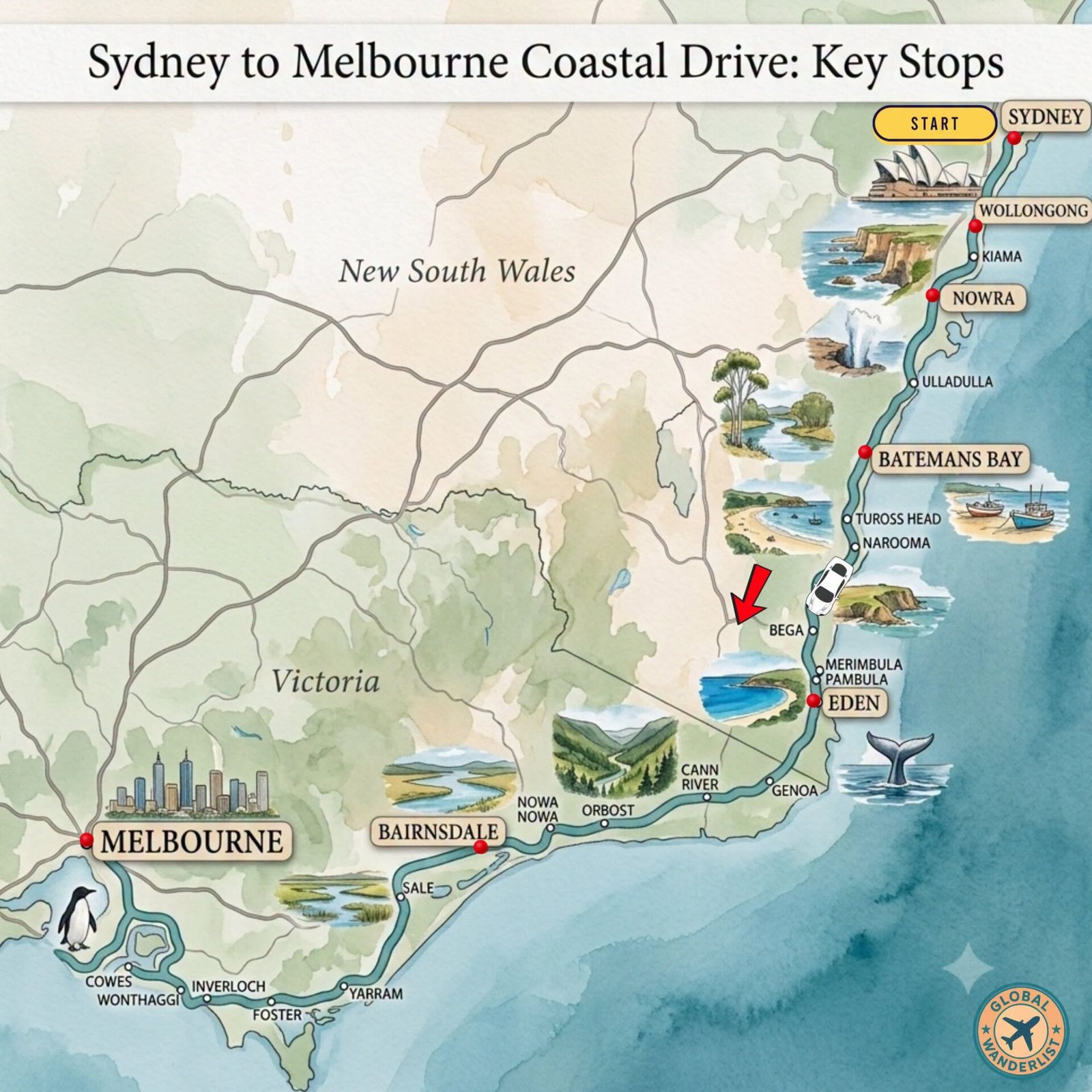
The coastal route between Sydney and Melbourne offers a very different experience from the inland highway. Beaches, fishing towns, and national parks line nearly the entire journey along the Princes Highway. Most travelers take about a week to complete it, though it easily stretches longer with detours.
This drive rewards those who slow down at the smaller towns rather than rushing straight through. Below is a full breakdown of the route, including where to eat and what to see at each major stop.
Route Overview
| Stop | Distance from Previous Stop | Best For |
| Sydney (Start) | – | Harbour views, city sights |
| Wollongong | 85 km | Beaches, escarpment views |
| Kiama | 30 km | Blowhole, coastal walks |
| Nowra | 40 km | River access, wildlife parks |
| Batemans Bay | 150 km | Beaches, oyster farms |
| Narooma | 70 km | Fishing, Montague Island |
| Eden | 150 km | Whale watching, wharves |
| Bairnsdale | 210 km | Gateway to Gippsland Lakes |
| Melbourne (End) | 280 km | City sights, laneway culture |
Total driving distance runs close to 1,000 kilometers depending on detours. Most travelers spread this across one to two weeks to properly enjoy the coastline along the way.
Sydney
Sydney kicks off this drive with its famous harbor, beaches, and skyline. Before departing south, it is worth spending a day or two exploring the Opera House precinct and surrounding neighborhoods, since the route south moves quickly into smaller coastal towns.
Planning Tips for Leaving Sydney
- Leave the city early to avoid heavy traffic on the Princes Highway heading south. Weekday mornings before 8 a.m. tend to be smoothest.
- Fill your tank before leaving the city, since prices often climb once you reach smaller coastal towns.
- Book accommodation in advance for peak weekends, since coastal towns along this route fill quickly during school holidays.
What to See Before You Go
- Walk across the Sydney Harbour Bridge for sweeping views of the Opera House and harbor. The pedestrian walkway is free and open daily.
- Visit The Rocks, Sydney’s oldest neighborhood, for cobblestone laneways and historic pubs. It sits within easy walking distance of Circular Quay.
- Explore Bondi Beach before departing south. The coastal walk from Bondi to Coogee is a popular way to see several beaches in one outing.
Wollongong
Wollongong sits beneath a dramatic escarpment, giving the city a distinctive backdrop found nowhere else on this route. Its beaches rank among the cleanest in the state, and the city has developed a genuinely strong dining scene in recent years. It makes an easy first stop heading south from Sydney.
Where to Eat in Wollongong
- 7 Cutz Steakhouse on Crown Street brings South African-style braai cooking to the local dining scene. Its bold flavors have made it a standout among Wollongong’s newer restaurants.
- Kitchen 42 in nearby Dapto offers a warm, neighborhood Italian dining experience. It has built a loyal following for its welcoming atmosphere and reliable menu.
What to See in Wollongong
- Visit the Sea Cliff Bridge just north of the city, a dramatic curved bridge built directly over the ocean. It is one of the most photographed stretches of coastline in New South Wales.
- Walk or cycle the Wollongong foreshore, taking in views of the harbor and lighthouse. It is an easy, scenic way to stretch your legs.
- Explore the Illawarra Escarpment via one of several lookout points above the city. The views stretch from the mountains straight down to the coast.
Kiama
Kiama is best known for its blowhole, where ocean swells force seawater dramatically upward through a rock formation. The town’s compact center makes it an easy stop for a coffee or lunch break. Its coastal walking track links several of the area’s best viewpoints.
Where to Eat in Kiama
- The Grand Kiama is an unpretentious bistro known for its seafood pie and generous pub-style servings. It suits a casual lunch stop between sightseeing.
- KG on Terralong Street offers South African cuisine in a relaxed setting, adding some variety to the town’s dining scene.
What to See in Kiama
- Watch the Kiama Blowhole in action, particularly dramatic during rough seas. It is one of the largest blowholes in the world.
- Walk the Kiama Coastal Walk, which links the blowhole to several nearby beaches and lookouts. The full walk takes a few hours at an easy pace.
- Visit the Kiama Lighthouse, perched right beside the blowhole. It offers good photo opportunities over the surrounding coastline.
Nowra
Nowra sits on the Shoalhaven River, serving as a practical stopping point with access to both river activities and nearby beaches. It is a good base for exploring Jervis Bay, known for some of the whitest sand in Australia. Wildlife parks in the area also make it a solid family stop.
Where to Eat in Nowra
- Nowra’s town center offers a range of casual cafes and bistros suited to a quick lunch before continuing toward the coast. Riverside dining options take advantage of the Shoalhaven’s scenery.
- Local pubs in the area serve reliable counter meals, a practical choice for travelers passing through on a tight schedule.
What to See in Nowra
- Visit Jervis Bay, a short detour from Nowra, known for its extremely white sand and clear turquoise water. Hyams Beach is often cited as having some of the whitest sand in the world.
- Explore the Shoalhaven River by kayak or boat tour. The river offers a calmer alternative to the open ocean along this stretch.
- Visit Nowra’s wildlife park to see native Australian animals up close. It makes a good stop for families traveling with children.
Batemans Bay
Batemans Bay sits where the Clyde River meets the ocean, known for its oyster farms and relaxed beach town atmosphere. It serves as a popular midpoint stop for travelers driving between Sydney and the Victorian border. Nearby towns add further options for fresh seafood and coastal scenery.
Where to Eat in Batemans Bay
- The Patch, just south of Batemans Bay, celebrates local producers including Bodalla Dairy and Narooma Seafood. Its stylish setting has made it a standout on this stretch of coast.
- Al Fresco Coffee Roasters serves strong coffee and a relaxed cafe menu, ideal for a morning stop before continuing the drive.
What to See in Batemans Bay
- Take a cruise along the Clyde River, taking in views of the surrounding forest and coastline. Several operators run scenic trips from the town wharf.
- Visit Batemans Bay’s oyster farms for a tasting straight from the source. The region is well known for its Sydney rock oysters.
- Explore Murramarang National Park nearby, where kangaroos are known to gather directly on the beach at Pebbly Beach.
Narooma
Narooma is a quiet fishing town known for its clear waters and access to Montague Island, home to fur seal colonies and little penguins. The town’s boat harbor remains central to daily life here. It makes a peaceful stop for travelers looking to slow down partway through the drive.
Where to Eat in Narooma
- Narooma’s waterfront cafes and seafood restaurants take full advantage of the town’s fishing industry, serving fresh local catch daily. Simply Seafood is a well-regarded local option for a casual seafood meal.
- Local bakeries and cafes provide easy breakfast and lunch options before heading out on the water.
What to See in Narooma
- Take a boat tour to Montague Island to see fur seals and, during summer months, little penguins. Guided tours run regularly from the harbor.
- Visit Narooma’s famous “Australia Map” rock formation, visible from the town’s boardwalk. Its shape closely resembles a map of the country.
- Explore the nearby Glasshouse Rocks, a striking rock formation just south of town. It is a popular spot for photography at sunrise.
Eden
Eden sits near the southernmost point of this route, historically built around the whaling industry. Today, it is one of the best places in New South Wales to watch migrating whales each year. Its working wharf still reflects the town’s strong ties to the fishing industry.
Where to Eat in Eden
- Eden’s wharf area offers fresh, straightforward seafood, including a seafood caravan known locally for its fish takeaway. It is a fitting way to experience the town’s fishing heritage.
- Local pubs and bistros round out the dining options, serving reliable counter meals suited to travelers passing through.
What to See in Eden
- Visit the Eden Killer Whale Museum, which tells the area’s unusual history of cooperation between whalers and orcas. It is one of the more unique museums along this route.
- Take a whale-watching cruise during the migration season between October and November. Eden is considered one of the best land and sea vantage points in the state.
- Walk along the Cat Balou Cruises wharf area for views over Twofold Bay. It offers a good sense of the town’s maritime character.
Bairnsdale
Bairnsdale marks the gateway to the Gippsland Lakes, Australia’s largest network of coastal lagoons. The town itself serves as a practical service center for the surrounding region. From here, travelers can detour toward Lakes Entrance or continue directly toward Melbourne.
Where to Eat in Bairnsdale
- Bairnsdale’s town center offers a solid range of cafes and bistros, suited to a relaxed lunch before the final stretch to Melbourne. Local pubs provide reliable, no-fuss counter meals.
- Nearby Paynesville, on the edge of the Gippsland Lakes, adds a few waterfront dining options worth the short detour.
What to See in Bairnsdale
- Visit St Mary’s Catholic Church, known for its remarkable ceiling murals painted by Italian artist Francesco Floreani. It is an unexpected highlight in a small regional town.
- Take a detour to Lakes Entrance to see the Gippsland Lakes system up close. The area offers boating, fishing, and relaxed waterfront dining.
- Explore the Mitchell River silt jetties, among the longest freshwater silt jetties in the world. A walking trail runs along their length.
Melbourne
Melbourne closes out this coastal journey, known for its laneway culture, strong coffee scene, and compact, walkable center. Phillip Island, home to the famous Penguin Parade, sits a worthwhile detour just before reaching the city. Arriving in Melbourne marks the end of a drive that has covered blowholes, whale-watching towns, and vast coastal lakes.
Planning Your Melbourne Arrival
- Time your arrival to avoid peak traffic on the South Gippsland or Princes Highway approaches. Weekday afternoons tend to be busiest heading into the city.
- Consider detouring to Phillip Island for the Penguin Parade if timing allows. Little penguins come ashore each evening at dusk.
- Book accommodation near the CBD or Southbank if this is your first visit. Both areas put you within walking distance of major attractions.
What to See First in Melbourne
- Walk through Hosier Lane to see Melbourne’s constantly changing street art. It remains one of the most photographed laneways in the country.
- Visit Federation Square for a mix of galleries, architecture, and city energy. It sits right in the heart of the CBD.
- Explore the Royal Botanic Gardens for a calm finish to the trip. Its lake and lawns offer a relaxed final stop after a long coastal drive.
Final Thoughts
The Sydney to Melbourne coastal drive trades the speed of the inland highway for blowholes, whale-watching towns, and some of the country’s clearest water. Every stop along the way adds its own character, from Kiama’s dramatic geology to Eden’s whaling history. Take your time, book ahead during peak periods, and let the smaller coastal towns shape the pace of your trip.