
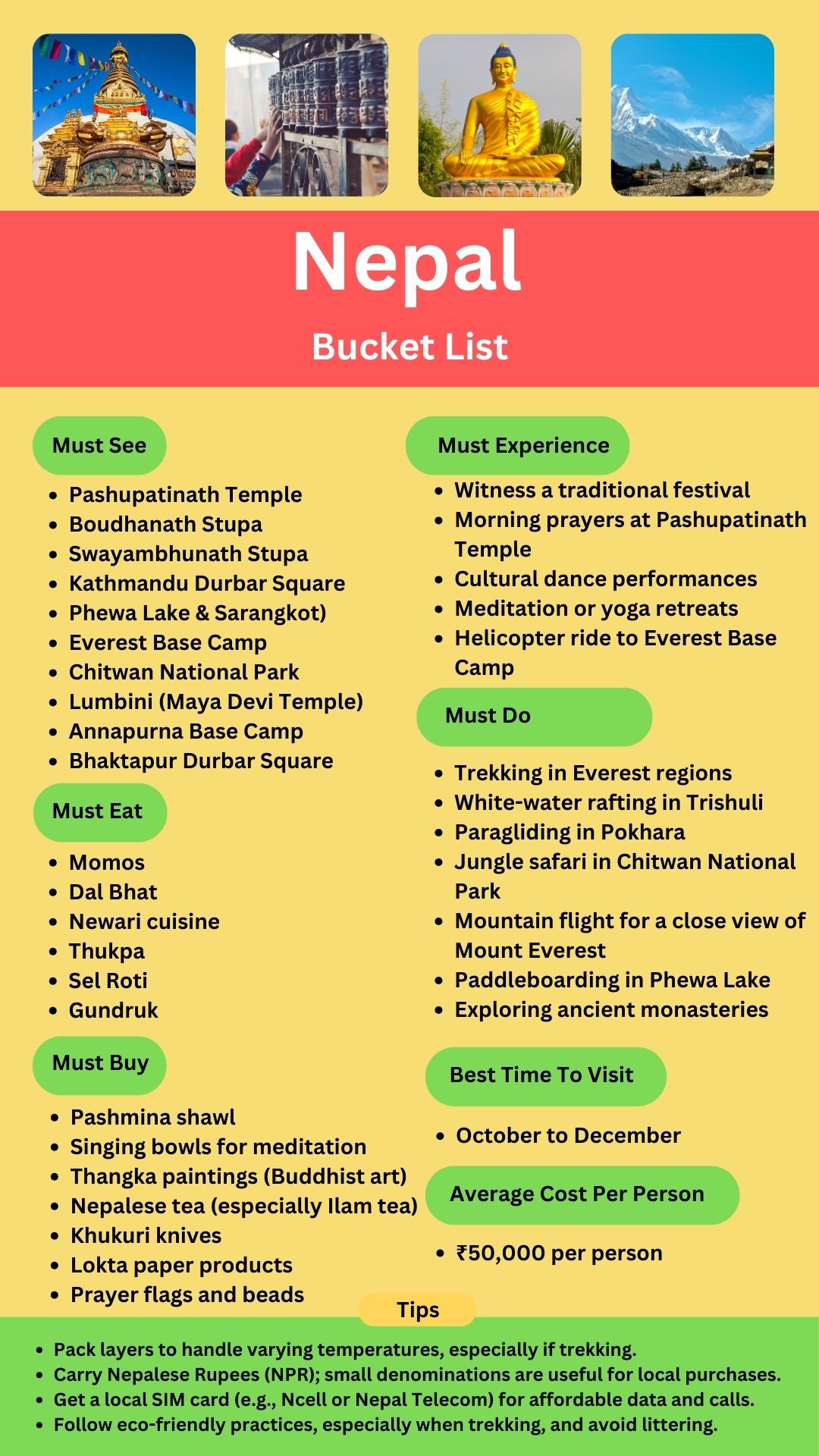
Nepal is a country of extremes. Towering peaks meet golden temples, and quiet monasteries sit near buzzing city squares. Few places on earth offer this much spiritual depth and outdoor adventure in one trip.
This guide covers the top sights, food, activities, and travel tips to help you plan a smooth Nepal trip. Whether you are here for Everest or for temple bells in Kathmandu, use this as your roadmap.
Sacred Temples and Historic City Squares
Nepal’s spiritual sites reflect centuries of Hindu and Buddhist tradition living side by side. Many of these landmarks sit right in the heart of Kathmandu.
Pashupatinath Temple is one of the most important Hindu temples in the world. Cremation ceremonies take place along the Bagmati River here daily. Non-Hindus cannot enter the main shrine, but the surrounding complex is open to all visitors.
Boudhanath Stupa is one of the largest stupas in the world. Its white dome and painted eyes watch over the city below. Walking clockwise around the stupa, called kora, is a common practice among pilgrims.
Swayambhunath Stupa, often called the Monkey Temple, sits on a hilltop above Kathmandu. It offers sweeping views of the valley below. The climb up hundreds of stone steps is worth it for the panorama alone.
Kathmandu Durbar Square holds a cluster of palaces, courtyards, and temples. Much of it dates back to the Malla kings who once ruled the valley. A 2015 earthquake damaged parts of the square, though restoration work continues.
Bhaktapur Durbar Square offers a quieter, more preserved version of Kathmandu’s royal history. Its terracotta brick buildings and wood carvings feel frozen in time. Many visitors consider it more atmospheric than the busier Kathmandu square.
Insider Tips for Visiting Temple Complexes
- Visit Pashupatinath in the early morning to see rituals before crowds arrive. This is also when the light is best for photos of the riverside ghats.
- Walk around Boudhanath Stupa in a clockwise direction, following local custom. Sit at one of the rooftop cafes nearby for a relaxed view over the dome.
- Wear comfortable shoes at Swayambhunath, since the stone steps can be steep and uneven. Watch your belongings closely, as the resident monkeys are known to grab food and shiny objects.
- Buy a combined ticket for Kathmandu and Bhaktapur Durbar Squares if you plan to visit both. It usually works out cheaper than paying separately.
Mountain Views and Trekking Destinations
Nepal’s mountains draw trekkers and photographers from every corner of the globe. Even non-trekkers can catch incredible views without committing to a multi-day hike.
Everest Base Camp remains the ultimate bucket list trek for many travelers. The trail winds through Sherpa villages, suspension bridges, and high altitude passes. Most trekkers need ten to twelve days to complete the round trip.
Annapurna Base Camp offers a slightly shorter, though still demanding, trekking experience. The trail passes through rhododendron forests and traditional Gurung villages. Many trekkers rank the views here among the best in the Himalayas.
Phewa Lake and Sarangkot near Pokhara give travelers a gentler way to enjoy mountain scenery. Boating on Phewa Lake offers calm reflections of the Annapurna range. Sarangkot is famous for sunrise views over the peaks.
Chitwan National Park sits far from the mountains but offers its own kind of wilderness. Dense jungle here is home to rhinos, tigers, and elephants. It gives trekkers and non-trekkers alike a completely different side of Nepal.
Lumbini, the birthplace of Buddha, adds a peaceful, low altitude stop to any Nepal itinerary. The Maya Devi Temple marks the exact spot of his birth. Monasteries built by different countries surround the sacred garden.
Best Photo Spots for Mountain Scenery
- Catch sunrise at Sarangkot for golden light hitting the Annapurna range. Arrive at least thirty minutes early to grab a good viewing spot.
- Photograph Phewa Lake in the late afternoon, when the water turns calm and mirror-like. Include a boat in the foreground for scale and color.
- Capture prayer flags against snowy peaks along the Everest Base Camp trail. Tengboche Monastery is a particularly scenic stop for this shot.
- Shoot the golden Maya Devi Temple complex at Lumbini in soft morning light. The surrounding monastery gardens add color and depth to wider shots.
Cultural Experiences That Bring Nepal to Life
Nepal’s culture reveals itself through festivals, rituals, and quiet daily practices. These experiences give travelers a deeper connection to the country beyond its scenery.
Witnessing a traditional festival is one of the richest ways to experience Nepal. Dashain and Tihar are among the most widely celebrated, filling streets with color and music. Timing your trip around one of these festivals adds real depth to the experience.
Morning prayers at Pashupatinath Temple offer a quiet, moving start to the day. Bells ring and incense fills the air as devotees gather. Watching respectfully from a distance is welcomed by most locals.
Cultural dance performances in Kathmandu showcase traditional Newari and regional styles. Many restaurants pair dinner with a live show for visitors. It is an easy way to experience local music and costume in one evening.
Meditation or yoga retreats have become popular additions to Nepal itineraries. Many centers in Kathmandu and Pokhara offer short courses for beginners. Multi-day retreats give travelers a deeper reset from daily life.
A helicopter ride to Everest Base Camp appeals to travelers short on time. It offers close up mountain views without the multi-day trek. Some tours even include a quick landing near the base camp itself.
Hidden Gems Beyond the Main Circuit
- Ask locals about smaller Newari festivals that happen outside the major holiday calendar. These community events often feel more intimate than the big citywide celebrations.
- Look for smaller, family run meditation centers instead of large commercial retreats. They often provide more personal attention and flexible scheduling.
- Visit a lesser known monastery near Boudhanath instead of the main stupa area. Many hold daily prayer sessions open to respectful visitors.
- Explore Bhaktapur’s back alleys away from the main square. Pottery workshops and quiet courtyards reveal everyday life away from the crowds.
Adventure Activities for Thrill Seekers
Beyond trekking, Nepal offers plenty of ways to get your adrenaline pumping. The country’s rivers, hills, and jungles make it a natural playground for adventure travel.
White-water rafting in Trishuli is one of the most accessible adventure activities near Kathmandu. Rapids here suit both beginners and experienced rafters. Full day and half day trips are both widely available.
Paragliding in Pokhara has become one of Nepal’s signature adventure activities. Flights launch from Sarangkot and drift over Phewa Lake below. Most flights last thirty minutes and require no prior experience.
A jungle safari in Chitwan National Park brings you close to rhinos, deer, and possibly tigers. Guided walks, jeep rides, and canoe trips all offer different perspectives on the park. Early morning safaris tend to bring the best wildlife sightings.
A mountain flight gives travelers a close view of Mount Everest without setting foot on the trail. These short scenic flights depart from Kathmandu early in the morning. Clear weather is essential, so flights sometimes get delayed or rescheduled.
Paddleboarding in Phewa Lake offers a relaxed contrast to Nepal’s bigger adventure activities. Calm waters make it approachable for beginners. Renting a board for an hour is an easy way to enjoy the lake at your own pace.
Planning Tips for Adventure Activities
- Book Trishuli rafting trips with operators who provide proper safety gear and certified guides. Not all companies maintain the same safety standards.
- Schedule Pokhara paragliding flights for the morning, since winds tend to pick up later in the day. Clear mornings also give better visibility over the lake and mountains.
- Choose a Chitwan safari operator with a strong conservation record. Ethical operators prioritize animal welfare over guaranteed close encounters.
- Keep a flexible day free in your itinerary for mountain flights. Weather delays are common, and having a buffer day helps avoid disappointment.
A Food Lover’s Guide to Nepali Cuisine
Nepali food blends Tibetan, Indian, and local mountain influences into something distinct. Meals here are hearty, warming, and built for high altitude energy.
Momos are Nepal’s most iconic street food. These steamed or fried dumplings come stuffed with meat or vegetables. Locals often eat them with a spicy tomato based dipping sauce called achar.
Dal bhat is the everyday staple meal across Nepal. It typically includes lentil soup, rice, and a rotating set of vegetable curries. Many trekking lodges serve unlimited refills, which fuels the popular trekking phrase “dal bhat power.”
Newari cuisine reflects the food traditions of the Kathmandu Valley’s original inhabitants. Dishes often include buffalo meat, beaten rice, and fermented soybeans. Newari feasts, called bhoj, can include dozens of small dishes at once.
Thukpa is a noodle soup with clear Tibetan roots. It typically includes vegetables, meat, and a light, warming broth. It is a popular choice in the colder mountain regions.
Sel roti is a sweet, ring shaped rice bread often made during festivals. It has a slightly crispy exterior and soft interior. Street vendors also sell it as a regular snack in many towns.
Gundruk is a fermented leafy green dish with a distinct sour flavor. It is often served as a side dish or turned into a soup. Many households prepare it in batches to last through the winter months.
Local Etiquette Around Food and Dining
- Eat with your right hand when dining traditionally, especially with dal bhat. The left hand is considered unclean in many local customs.
- Avoid touching communal serving dishes with a hand or utensil that has touched your mouth. This concept, known as jutho, matters a lot in Nepali dining culture.
- Accept second helpings graciously when offered dal bhat at a local home or lodge. Refilling plates is a normal part of Nepali hospitality.
- Try street food from vendors with steady local customer traffic. Busy stalls usually indicate fresher ingredients and better turnover.
Souvenirs and Shopping Worth Bringing Home
Shopping in Nepal offers a chance to bring home handcrafted goods tied to its Himalayan culture.
A pashmina shawl is one of Nepal’s most popular textile exports. Genuine pashmina comes from the soft undercoat of mountain goats. Prices vary widely, so it helps to check for quality before buying.
Singing bowls for meditation are a favorite souvenir among travelers. These metal bowls produce a resonant tone when struck or rubbed with a mallet. Many shops in Kathmandu offer demonstrations before you buy.
Thangka paintings represent a traditional form of Buddhist art. These detailed scroll paintings often depict deities or mandalas. Prices reflect the time and skill involved, since some pieces take weeks to complete.
Nepalese tea, especially Ilam tea, makes a lightweight and practical gift. Ilam district produces some of the country’s best quality leaves. Buying directly from tea shops often gets you fresher stock than tourist market stalls.
Khukuri knives are a traditional Nepali blade with deep cultural significance. Originally used by Gurkha soldiers, they now serve as popular collector’s items. Quality varies, so buying from reputable shops matters here.
Lokta paper products showcase a traditional handmade paper craft. Made from a native shrub, this paper is used for journals, cards, and lampshades. It has a distinct texture that machine made paper cannot replicate.
Prayer flags and beads carry spiritual significance in both Hindu and Buddhist traditions. Colorful prayer flags are believed to spread blessings as they flutter in the wind. Mala beads are commonly used for meditation and prayer counting.
Budget Tips for Shopping Smart
- Bargain gently at markets, but expect less flexibility at fixed price cooperative shops. These shops often support artisans directly.
- Compare prices at a few pashmina shops before committing, since quality and pricing vary widely. Genuine pashmina should feel soft but substantial, not overly thin.
- Buy tea in smaller quantities unless you plan to use it quickly. Fresh Ilam tea loses flavor over long periods of storage.
- Skip souvenir shops directly outside major temples and squares. Prices are usually higher there than in nearby neighborhood shops.
When to Go and How Much to Budget
Timing your Nepal trip well can make a significant difference in weather, visibility, and overall experience.
The best time to visit Nepal is between October and December. This period offers clear skies and stable trekking conditions. Mountain views tend to be sharpest during these months, especially in the early morning.
Average costs run around 50,000 rupees per person for a full trip, though this varies by travel style. Budget travelers can spend less by staying in guesthouses and eating local meals. Trekkers should budget extra for permits, guides, and gear rental.
Seasonal Advice for First-Time Visitors
- Avoid the monsoon season from June through August if possible. Heavy rain can disrupt treks and reduce mountain visibility significantly.
- Consider spring, from March to May, as a solid alternative to the autumn peak season. Rhododendron blooms add extra color to many trekking routes during this period.
- Book flights and trekking permits early if traveling during October through December. This is Nepal’s busiest tourist season, and availability fills up fast.
- Pack layers regardless of season, since temperatures shift quickly between valleys and higher elevations.
Practical Tips Every Traveler Should Know
A few practical habits will make your Nepal trip smoother from the moment you arrive.
Pack layers to handle varying temperatures, especially if trekking. Mornings and evenings can turn cold quickly, even during warmer months. A lightweight down jacket packs small and covers most situations.
Carry Nepalese rupees, since small denominations are useful for local purchases. Many smaller shops, teahouses, and vendors do not accept cards. ATMs are available in major cities but less reliable in remote trekking areas.
Get a local SIM card, such as Ncell or Nepal Telecom, for affordable data and calls. This makes it easier to stay connected for maps and messaging. SIM cards are widely available at the airport and in central Kathmandu.
Follow eco-friendly practices, especially when trekking, and avoid littering. Many popular trails have struggled with waste in recent years. Carrying a reusable water bottle and packing out trash helps protect these fragile mountain environments.
Common Mistakes First-Timers Make
- Underestimating altitude sickness risk on high elevation treks. Ascending too quickly without acclimatization days can cause serious health issues.
- Skipping travel insurance that covers trekking and emergency evacuation. Helicopter rescues in remote areas can be extremely costly without coverage.
- Overpacking for city stays while underpacking for trekking regions. Layering properly matters more than bringing excess clothing.
- Ignoring local customs around temples and sacred sites. Simple gestures, like removing shoes or dressing modestly, go a long way with locals.
Final Thoughts on Planning Your Nepal Adventure
Nepal delivers an unmatched mix of spiritual depth, mountain adventure, and warm hospitality. Golden stupas, snow capped peaks, and steaming plates of dal bhat all sit within reach of each other. Few countries offer this much variety in such a compact, welcoming space.
Whether you come for the trails of Everest, the calm of Phewa Lake, or the temple bells of Kathmandu, Nepal leaves a lasting impression. Start planning early, pack thoughtfully, and get ready for one of the most rewarding trips in the Himalayas.